
A bit of slip when you bite into a tough piece of steak is one thing. But when your denture moves every time you talk, your gums sting after every meal, or you are reaching for the adhesive tube twice a day, that is not a small annoyance. It is your mouth telling you something needs attention.
Most people try to push through. They add more adhesive, chew on one side, talk a little less, or avoid the café catch-up altogether. That is usually when small problems turn into expensive ones.
This guide explains why dentures loosen, what you can safely do at home, the warning signs that mean you should not wait, and what your options are here in NSW, including how costs and health fund rebates generally work.
Quick Answer: Why Are My Dentures Loose?
Most dentures loosen because the gum and bone they sit on slowly change shape after tooth loss. This is normal and happens to almost everyone. A professional reline (reshaping the fitting surface of the denture) usually restores a snug fit within a few days. See our denture reline service for details. Adhesive can only be a short-term patch.
Why Do Dentures Become Loose?

Your jawbone changes after tooth loss. Without tooth roots to stimulate it, the bony ridge that supports your denture gradually shrinks, a process called bone resorption. It is slow, but it never completely stops. Most dentures begin to feel loose somewhere between three and seven years after they were made, even when you have looked after them carefully. Lower dentures usually loosen sooner than upper dentures because there is less surface area to hold them in place and the tongue constantly moves them.
A few other things can speed up the process:
- Significant weight loss (including after illness or weight-loss surgery), which changes the soft tissue under the denture
- Long-term use of medications that cause dry mouth, such as some blood pressure tablets, antidepressants and antihistamines
- Osteoporosis and some medications used to treat it
- Dry mouth from age, dehydration or medical conditions such as diabetes or Sjögren’s syndrome
- Recent dental work or extractions that changed your bite or gum shape
- Grinding or clenching your teeth
- Wear, cracks or damage to the denture base or teeth
- Warping from hot water, a dishwasher or a hot car on a summer day
A note on Australian summers: Never leave your denture in a hot car, near a window in direct sun, or rinse it in boiling water. Acrylic can warp with heat, and even a small distortion can ruin the fit.
How Do I Know It Is Time for a Reline or a New Denture?
Signs your denture no longer fits properly include:
- It moves or lifts when you talk, laugh or eat
- You need more adhesive than you used to, or it will not hold for the day
- Food regularly gets trapped underneath
- You have red, sore or rubbed areas
- You have started avoiding foods you used to enjoy
- Your cheeks or lips look more sunken than before
As a rule of thumb, a denture should be checked at least every 12 months, even if it feels fine. Early adjustments are quicker, cheaper and much kinder to your gums.
How To Tighten Loose Dentures at Home
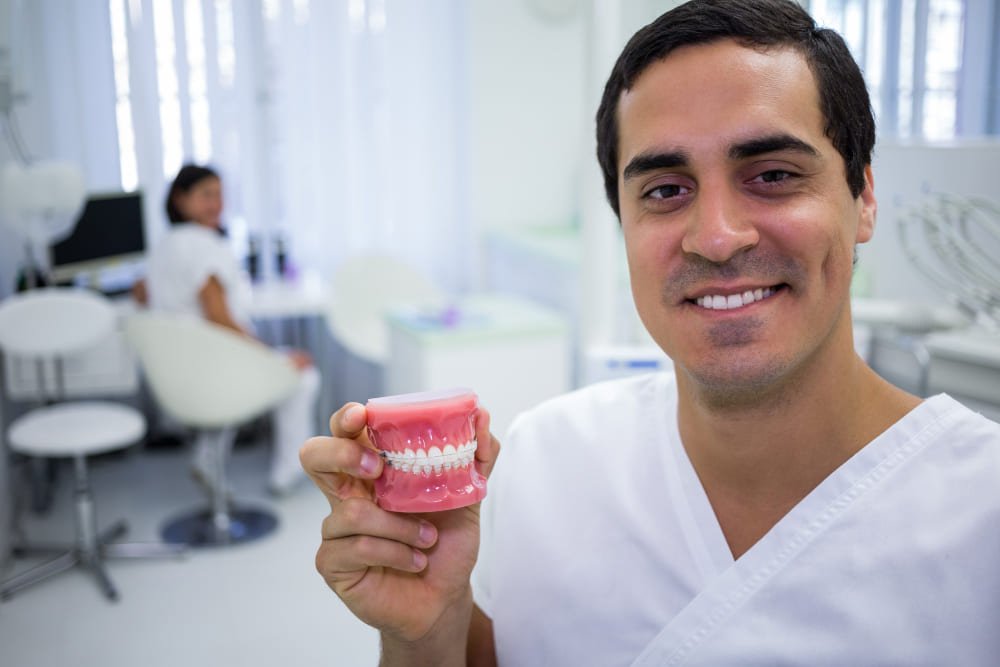
There’s no real way to permanently tighten dentures on your own. But a few short-term steps can hold things steady while you organise a proper appointment.
- Clean your denture and your gums thoroughly. Food debris and plaque reduce suction. Use a soft brush and a non-abrasive denture cleaner, not regular toothpaste, which can scratch the surface.
- Use a small amount of quality denture adhesive. Just enough to stabilise things for a day or two. Adhesive is a bandage, not a fix.
- Avoid hard, sticky or crunchy foods. Cut food into smaller pieces and chew evenly on both sides.
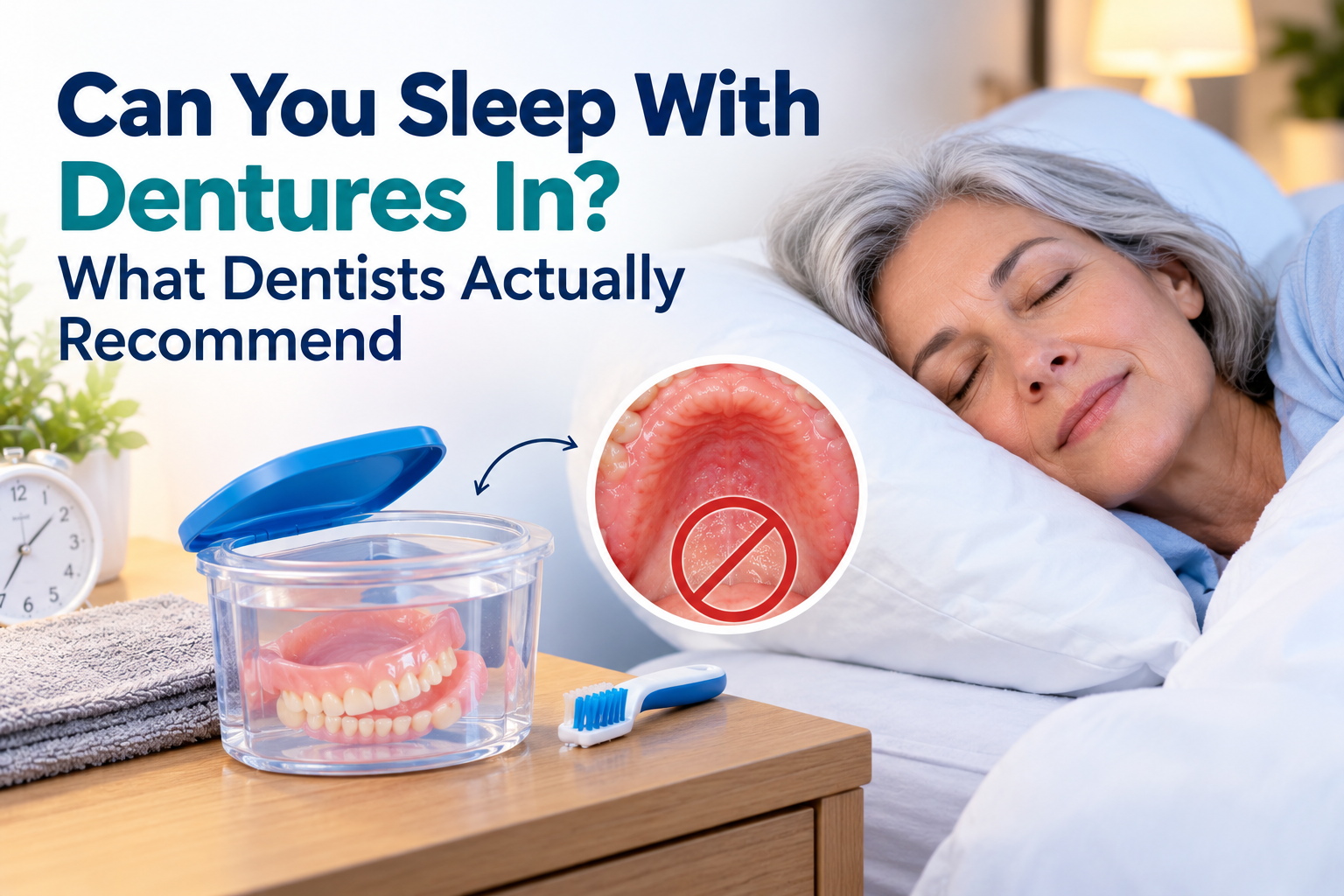
- Take your denture out overnight. Your gums need a break to recover. Store it in water or a denture-soaking solution, never in hot water.
- Keep your mouth moist. Sip water through the day. If you have dry mouth, ask your pharmacist about saliva substitutes.
What Not to Do
Do not sand, file, glue or reshape your denture at home. Avoid DIY reline kits and “boil and bite” products sold online or at the chemist. They can make the surface rough, change your bite and trap bacteria, and the damage often costs more to fix than the original loose fit. Superglue and household adhesives are also unsafe in your mouth. Read more in our guide to DIY denture repair.
Warning Signs You Can’t Ignore

This is the part most patients miss. A loose denture isn’t just uncomfortable. It can quietly cause real problems if you wait too long.
Book an appointment without delay if you notice any of these:
- Dentures hurting your gums even after a short time of wear. Ongoing pain is never normal.
- Open sores or ulcers that don’t heal within a week. Untreated denture sores can lead to infection.
- A clicking or popping sound when you eat or speak.
- A change in the appearance of your face, especially a sunken look around the mouth.
- Your bite feels different on one side.
- Bad taste or persistent bad breath that doesn’t go away after cleaning.
Sore spots that keep coming back in the same place can sometimes signal more serious soft tissue issues. Your prosthetist will check this during the assessment.
Loose Dentures Treatment Options in NSW
A loose denture does not always mean a brand-new set. At FBA, we usually start with the least invasive option that fixes the problem properly.
A Reline
The most common fix. We take a new impression of your gums with your existing denture, then reshape the fitting surface in our Tahmoor laboratory so it matches your gums as they are today. The teeth stay the same. The result is a snug fit again, usually within a few days. See our denture relines service, the complete denture relining guide, and the difference between soft and hard relines.
A Repair
If the denture is cracked, worn thin, or has a damaged border, we repair the structural issue first before deciding whether a reline will hold. Many repairs can be done quickly because our lab is on site. Explore our emergency denture repairs, clasp repairs and tooth addition repairs.
An Implant-Retained Option
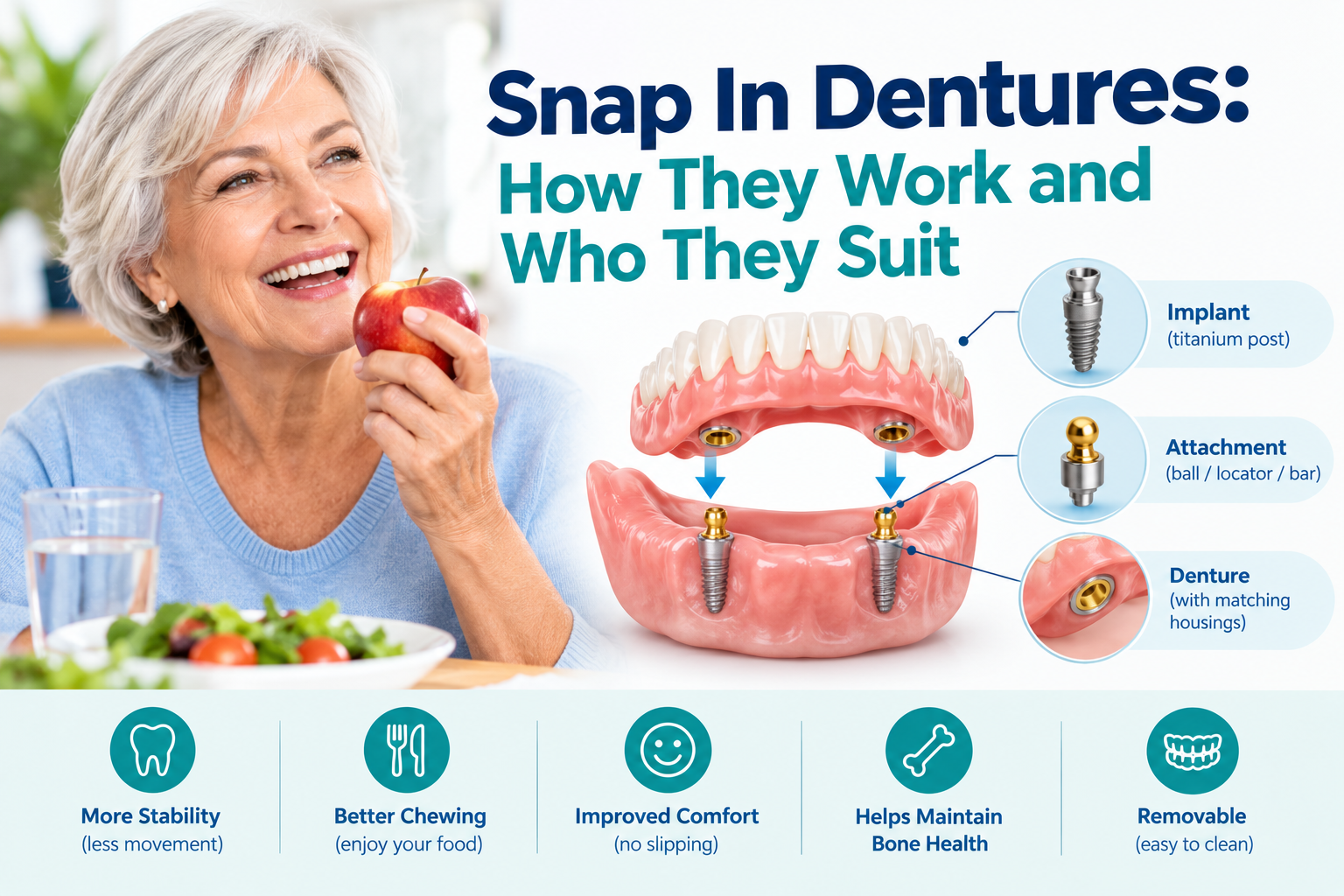
For patients with advanced bone loss (especially in the lower jaw), implant-retained dentures clip onto two or four implants and stop the slipping completely. We make the prosthetic. Your dental surgeon places the implants.
A New Denture
If your current denture is more than seven to ten years old, or has been relined a few times already, a replacement set often makes better long-term sense than ongoing repairs.
Do You Need a Dentist or a Dental Prosthetist?
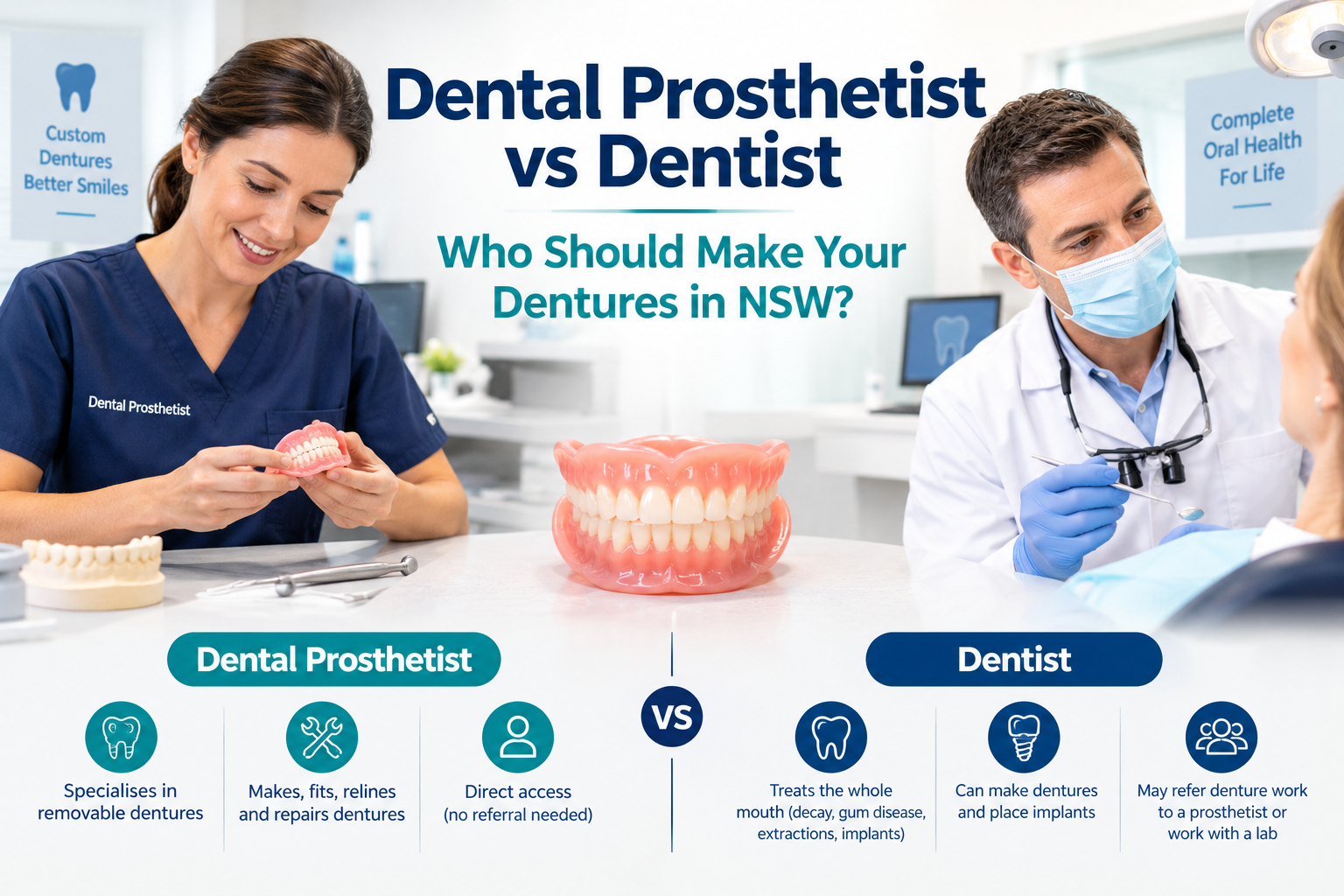
In Australia, dental prosthetists are registered with the Dental Board of Australia through AHPRA and are qualified to make, fit, reline and repair dentures. You can see a prosthetist directly. You do not need a referral from a dentist for dentures. If you need implants, extractions or have a medical concern in your mouth, we will coordinate with your dentist or dental surgeon.
What Do Loose Denture Treatments Cost in NSW?
Costs vary depending on the type of denture, materials and the work needed, so we always give you a clear quote before we start (see our full guide to denture costs in Australia). A few things are worth knowing:
- Private health insurance: Many extras policies provide rebates for dentures, relines and repairs, often under major dental or prosthetic items. Limits, waiting periods and annual caps differ between funds, so check your policy or call your fund before booking.
- Medicare: Standard Medicare does not generally cover dentures for adults.
- Concession and pension cardholders: Public dental services in NSW may be available for eligible concession cardholders, though waiting lists can be long. Ask us about your options.
- Veterans: DVA Gold Card and eligible White Card holders may be covered. Ask us for details.
- Payment plans: Ask about payment options if you need to spread the cost.
How Often Should You Replace or Review Your Dentures?
As a guide, plan for a new set every 5 to 10 years, with a check-up at least once a year. Your gums, bone and bite keep changing, so a regular review catches problems early, saves money and protects your oral health. Our guide explains how long dentures last.
Looking After Your Dentures Day to Day
- Clean them every day with a soft brush and a denture cleaner
- Handle them over a folded towel or basin of water in case you drop them
- Rinse after meals
- Brush your gums, tongue and any natural teeth morning and night
- Soak overnight in water or a denture-soaking solution as directed
- Never use bleach or boiling water
For more, read our denture cleaning tips, acrylic denture care and new denture wearer tips.
How FBA Approaches Loose Dentures

Every new and remade denture at FBA starts with a 3Shape digital scan, not a tray of putty. We design the prosthetic on screen, 3D-print a trial version so you can test the fit, then precision-mill the final denture in our own Tahmoor laboratory. Because everything is made under one roof, adjustments happen quickly, with no waiting for work to be posted interstate or overseas. Learn more about FBA and our 3D-printed denture process.
We look after patients across NSW from our clinics at Bradbury (Campbelltown area), Tahmoor, Spring Farm, Appin, Braidwood and Temora.
Frequently Asked Questions
Can dentures be tightened without getting new ones?
Yes, in most cases. A reline reshapes the inside of your existing denture to match your gums. It is usually much more affordable than a new set.
How long does a denture reline take?
In many cases it takes only a few days. A reline starts with a new impression of your gums, and the work is completed in our Tahmoor lab.
Is it safe to use denture adhesive every day?
Adhesive is fine as a short-term aid, but needing it constantly usually means the fit has changed. Heavy use can also hide a problem that is hurting your gums. See our full guide to denture adhesive.
Why do my lower dentures move more than my upper ones?
The lower jaw has less surface area, and your tongue and cheek muscles push the denture around. Implant-retained lower dentures are a popular solution.
Can I fix a loose denture myself with a DIY kit?
We do not recommend it. These kits can change your bite, harm your gums and damage the denture beyond repair.
How do I know if I need a new denture instead of a reline?
If your denture is cracked, worn, more than seven to ten years old, or has been relined several times, a new denture is often the better option. We will give you an honest recommendation at your consultation.
Do I need a referral to see a dental prosthetist in NSW?
No. You can book directly with a registered dental prosthetist.