
Choosing between chrome dentures vs acrylic dentures is one of the more consequential decisions a patient faces when planning for partial tooth replacement. Both options restore function and appearance, yet they differ significantly in material, durability, and comfort. For many people across NSW, this decision comes down to balancing cost against long-term performance — and understanding that difference can make all the difference in daily comfort.
Partial dentures aren’t one-size-fits-all. Someone missing a few back teeth has very different needs from someone missing several teeth across the upper arch. The framework material, whether chrome-cobalt metal or acrylic resin, directly shapes how the denture feels, fits, and holds up over years of use. This guide explains the practical differences between chrome and acrylic dentures, so you can approach your next dental consultation with realistic expectations and informed questions.
What Are Partial Denture Framework Options?
Before comparing materials directly, it helps to understand the broader partial denture framework options available today. Most partial dentures fall into one of three categories:
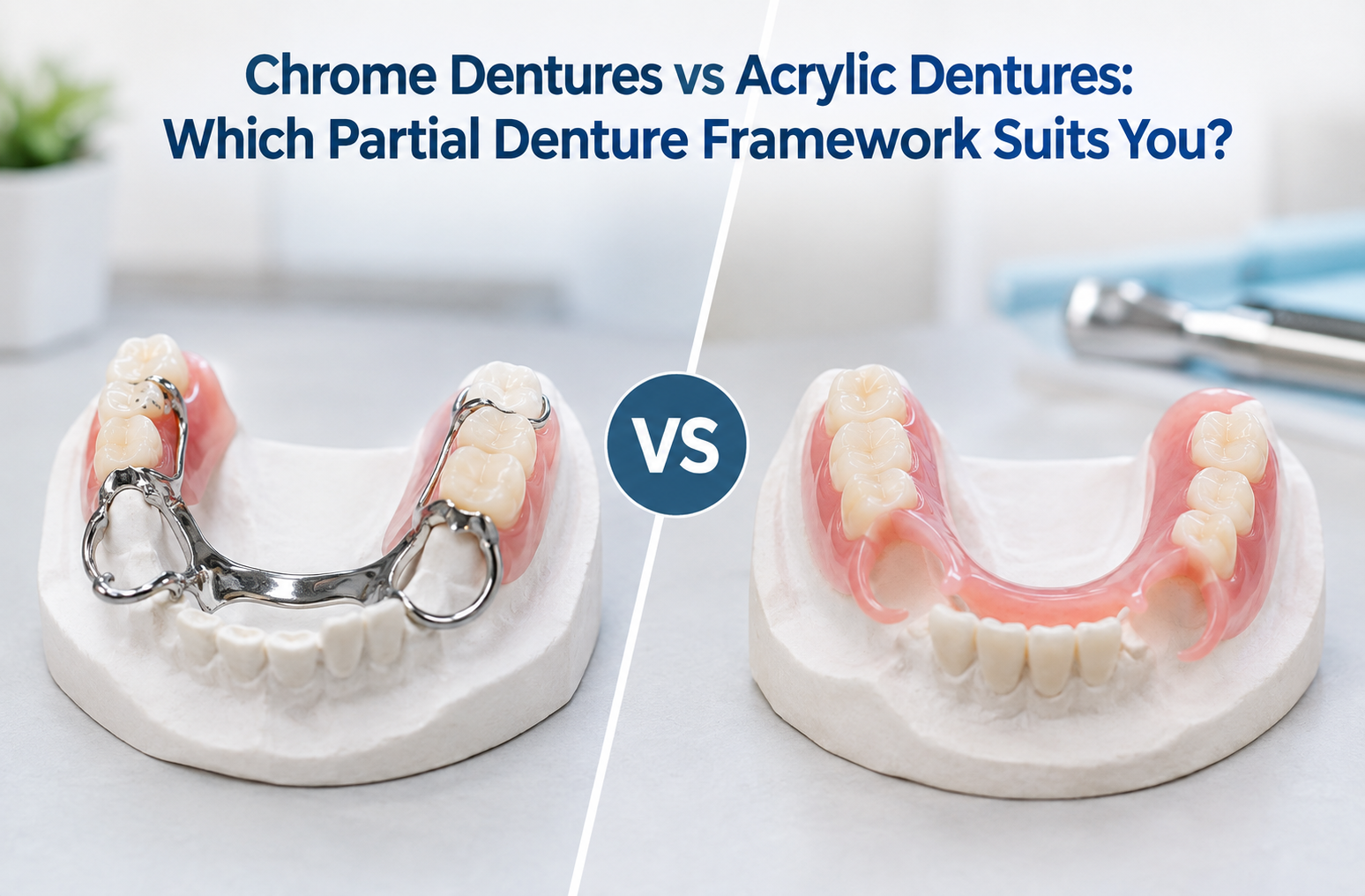
- Acrylic partial dentures — a flexible-feeling resin base, often used as a transitional or more affordable option.
- Chrome-cobalt partial dentures — a thin, rigid metal framework combined with acrylic gum-coloured sections and replacement teeth.
- Flexible partial dentures — made from a pliable nylon-based material, offering a different comfort profile again.
Each framework type suits different clinical situations, budgets, and personal preferences, which is why a proper dental assessment matters more than simply picking based on price alone.
Chrome Dentures vs Acrylic Dentures: Key Differences
Material and Structure
Acrylic partial dentures are built from a solid resin base that holds the replacement teeth and clasps onto remaining natural teeth for stability. They’re relatively simple to construct and adjust, which keeps costs manageable. You can read more about the specific advantages acrylic partial dentures offer for patients who need a reliable interim or budget-conscious solution.
Chrome dentures, by contrast, use a cast metal framework — typically a cobalt-chromium alloy — as their structural core. Acrylic and denture teeth are then built onto this frame. The metal base is considerably thinner than acrylic, which many wearers find noticeably more comfortable, particularly along the palate.
Strength and Durability
This is where the difference between chrome and acrylic dentures becomes most apparent. Chrome frameworks resist flexing and fracturing far better than acrylic, since metal simply withstands repeated biting forces more effectively than resin.
Acrylic dentures, while perfectly serviceable, are more prone to stress fractures over time, especially in patients with a strong bite. That said, acrylic remains easier and often cheaper to repair or adjust if damage does occur.
Comfort and Fit
Chrome dentures tend to feel less bulky in the mouth due to their thinner profile, which can mean less interference with speech and taste perception. Acrylic dentures, needing more material for adequate strength, sit somewhat thicker against the gums and palate.
Comparison Table: Chrome vs Acrylic Partial Dentures
| Feature | Chrome-Cobalt Dentures | Acrylic Dentures |
| Material base | Metal alloy framework | Resin (acrylic) base |
| Thickness | Thinner, less bulky | Thicker profile |
| Durability | High — resists flexing/cracking | Moderate — more prone to wear |
| Comfort | Generally higher | Adequate, improves with adjustment |
| Repair ease | More complex | Simpler and faster |
| Cost | Higher upfront | More affordable |
| Typical lifespan | 7–10 years | 5–7 years |
Which Partial Denture Is Better?
There’s no universal answer to which partial denture is better — it genuinely depends on individual circumstances. In fact, a clinical study comparing patient satisfaction between acrylic and chrome partial dentures found that patient preference often varies by function and aesthetics rather than material alone, reinforcing that the right choice comes down to individual needs. A patient prioritising long-term durability and a lighter feel may lean toward chrome. Someone needing an affordable, straightforward solution, or a short-term option while planning further treatment, may find acrylic more suitable.
When Chrome Dentures Make Sense
- You want maximum strength and a thinner, more discreet fit
- You’re missing several teeth and need firm, stable support
- Long-term durability matters more than upfront cost
Our chrome dentures service is built around exactly this kind of long-term, durable solution for patients who prioritise strength and comfort.
When Acrylic Dentures Make Sense
- Budget is a primary consideration
- You need a temporary or transitional solution
- Fewer teeth are missing, reducing structural demands on the base
If affordability and simplicity are the priority, our acrylic denture option offers a reliable, cost-effective path to restoring your smile.
Cost is often the deciding factor for many patients, and it’s worth reviewing general denture pricing across Australia to understand how chrome and acrylic options compare before committing to either.
Appearance Considerations
Both chrome and acrylic dentures can be designed to look convincingly natural, with gum-coloured acrylic sections blending against surrounding tissue. Patients concerned about aesthetics should discuss options for achieving the most natural-looking denture result regardless of which framework material is ultimately chosen.
Maintenance Differences
Metal frameworks generally require less adjustment over time due to their rigidity, though clasps may occasionally need tightening. Acrylic dentures may need more frequent professional check-ups to monitor for stress cracks, particularly in patients with heavier bite forces. Regardless of material, following proper daily cleaning habits remains essential for hygiene and longevity in both cases.
Final Thoughts
Deciding between chrome dentures vs acrylic dentures ultimately comes down to weighing durability, comfort, and budget against your specific dental needs. Chrome frameworks offer superior strength and a slimmer fit, while acrylic remains a practical, cost-effective choice for many patients. The right decision isn’t about which material is objectively superior — it’s about which one aligns with your bite, remaining teeth, lifestyle, and financial considerations. A thorough consultation with your dentist remains the most reliable way to determine the right partial denture framework for your individual situation.