
A slightly loose denture can turn an ordinary meal or conversation into an exercise in quiet anxiety. For many denture wearers across NSW, a good denture adhesive becomes a simple, everyday solution — restoring confidence and stability without needing an immediate trip to the dentist. Yet not all adhesives work the same way, and using them correctly matters just as much as choosing the right product.
Denture adhesive isn’t a one-size-fits-all fix, nor should it be treated as a permanent workaround for a poor-fitting denture. Understanding the different types available, how to use them properly, and — just as importantly — when persistent looseness signals a deeper fit issue, can help you get genuine value from adhesive use while protecting your long-term oral health. This guide covers everything worth knowing before reaching for that next tube.
What Is Denture Adhesive and How Does It Work?
Denture adhesive, sometimes called denture fixative, is a product applied to the fitting surface of a denture to improve grip, stability, and comfort. It works by creating a thin, cohesive layer between the denture and the gum tissue, filling microscopic gaps and reducing the small movements that cause irritation or embarrassment during eating and speaking.
Adhesives don’t replace a properly fitted denture — they supplement it. A well-made denture should already sit reasonably securely; adhesive simply adds an extra layer of confidence, particularly useful during the natural changes gums undergo over time.
Types of Denture Adhesive
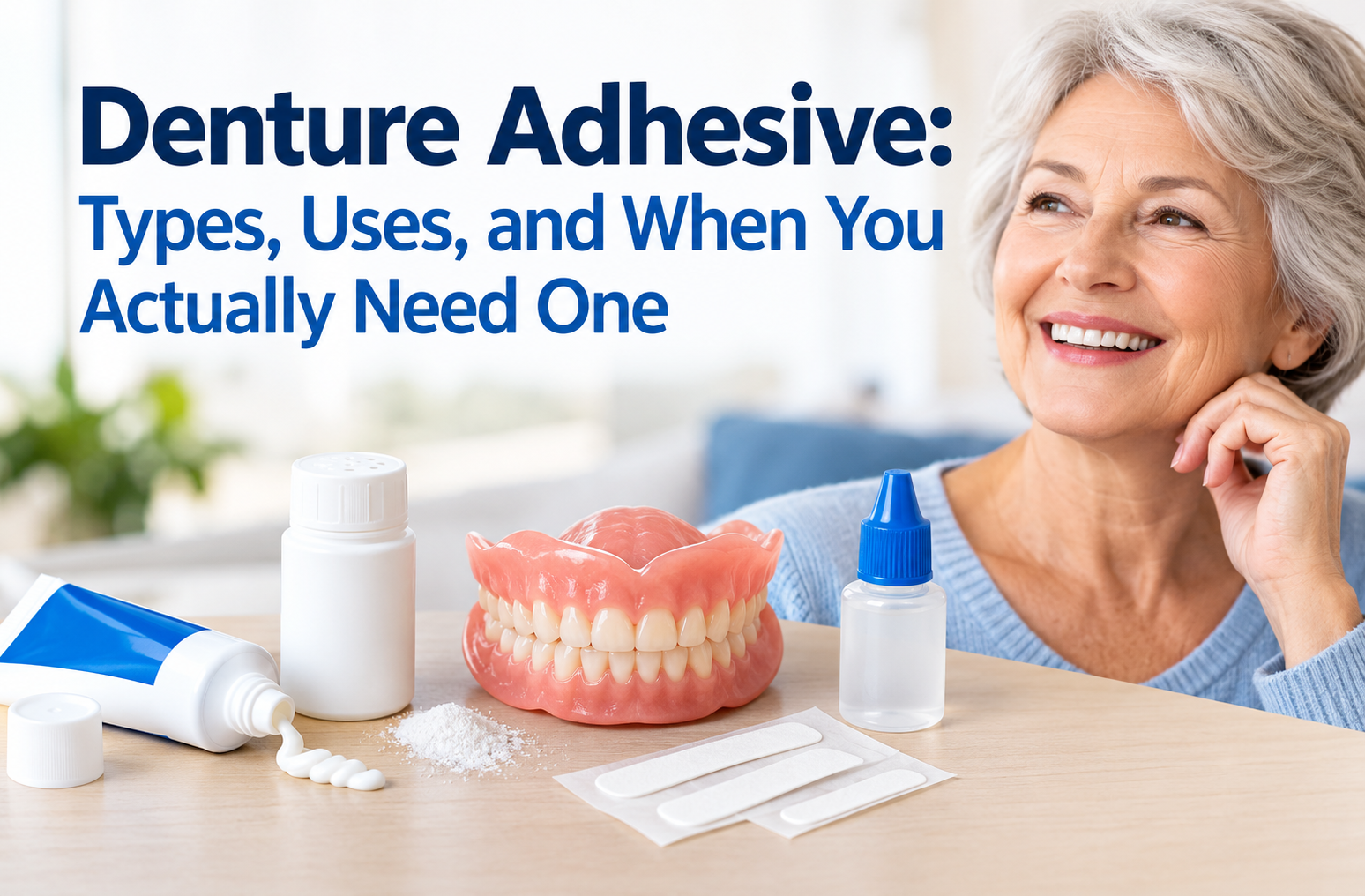
Denture Adhesive Cream vs Powder
The denture adhesive cream vs powder debate comes down largely to personal preference, though each has distinct characteristics worth understanding.
| Feature | Cream Adhesive | Powder Adhesive |
| Hold strength | Strong, long-lasting | Moderate, lighter hold |
| Ease of application | Requires practice for even spread | Simple to apply, less mess |
| Feel in the mouth | Slightly thicker sensation | Lighter, less noticeable |
| Best suited for | Significant looseness | Mild looseness or sensitive gums |
| Cleanup | Can be harder to remove | Easier to rinse away |
Other Denture Fixative Formats
Beyond cream and powder, a few other formats are worth knowing:
- Adhesive strips or pads — pre-cut and placed directly onto the denture, offering mess-free, consistent application.
- Adhesive liquids — lighter-hold options, often favoured for shorter wear periods or minor stability needs.
Each format suits different situations, and many denture wearers try more than one before settling on their preferred option.
How to Use Denture Adhesive Correctly
Knowing how to use denture adhesive properly makes a significant difference to both comfort and hygiene. Applying too much is one of the most common mistakes, often leading to excess adhesive squeezing out around the gumline during wear.
- Clean and dry the denture thoroughly before application, ensuring no leftover adhesive or debris remains from previous use.
- Apply a small, even amount, following the product’s guidance — generally a few short strips or a light, even dusting rather than a thick layer.
- Press the denture firmly into place for several seconds, allowing the adhesive to bond evenly across the fitting surface.
- Avoid eating immediately after application, giving the adhesive a few minutes to settle properly.
- Remove and clean thoroughly each day — adhesive should never be left to build up over multiple days, as this encourages bacterial growth and gum irritation.
Common Mistakes to Avoid
These missteps are common enough that regulatory safety guidance on denture adhesive use specifically warns against them, particularly overuse as a way to compensate for fit issues.
- Using excessive amounts in an attempt to compensate for a poorly fitting denture
- Reapplying adhesive over old residue without cleaning first
- Ignoring persistent looseness instead of seeking a professional fit assessment
Best Denture Adhesive for Loose Dentures
When searching for the best denture adhesive for loose dentures, it’s worth remembering that adhesive strength should match the degree of looseness, not simply the strongest product on the shelf. Mild movement often responds well to powder or lighter cream formulas, while more noticeable looseness may call for a stronger cream adhesive.
That said, adhesive should be viewed as a short-to-medium-term comfort measure rather than an ongoing fix. If you find yourself relying on increasing amounts of adhesive just to get through the day, it’s a clear signal that the denture itself needs professional attention — often addressed through our denture reline service rather than ongoing adhesive use.
When Adhesive Isn’t the Right Solution
Persistent looseness is frequently linked to natural changes in gum and bone shape over time, something adhesive can mask temporarily but never genuinely resolve. If you’re regularly dealing with loose dentures despite adhesive use, it’s worth having the fit properly assessed rather than increasing adhesive quantity indefinitely.
Similarly, denture-related soreness shouldn’t simply be tolerated. Reviewing possible causes of ongoing denture discomfort can help determine whether adhesive is genuinely the right tool, or whether an underlying fit issue needs addressing first.
Daily Hygiene and Adhesive Use
Using adhesive doesn’t change the fundamentals of good denture hygiene — if anything, it makes thorough cleaning more important. Residue left behind can trap bacteria against the gums, so following a consistent daily denture cleaning routine remains essential for anyone using adhesive regularly.
Final Thoughts
Denture adhesive, used correctly, offers a practical, confidence-restoring solution for everyday stability — whether through cream, powder, strips, or liquid formats. The key lies in using it as a supplement to a well-fitted denture, not a substitute for one. Persistent looseness deserves a proper dental assessment rather than an ever-increasing reliance on adhesive. With the right product, correct application, and attentive hygiene, adhesive can genuinely improve daily comfort for denture wearers across NSW.