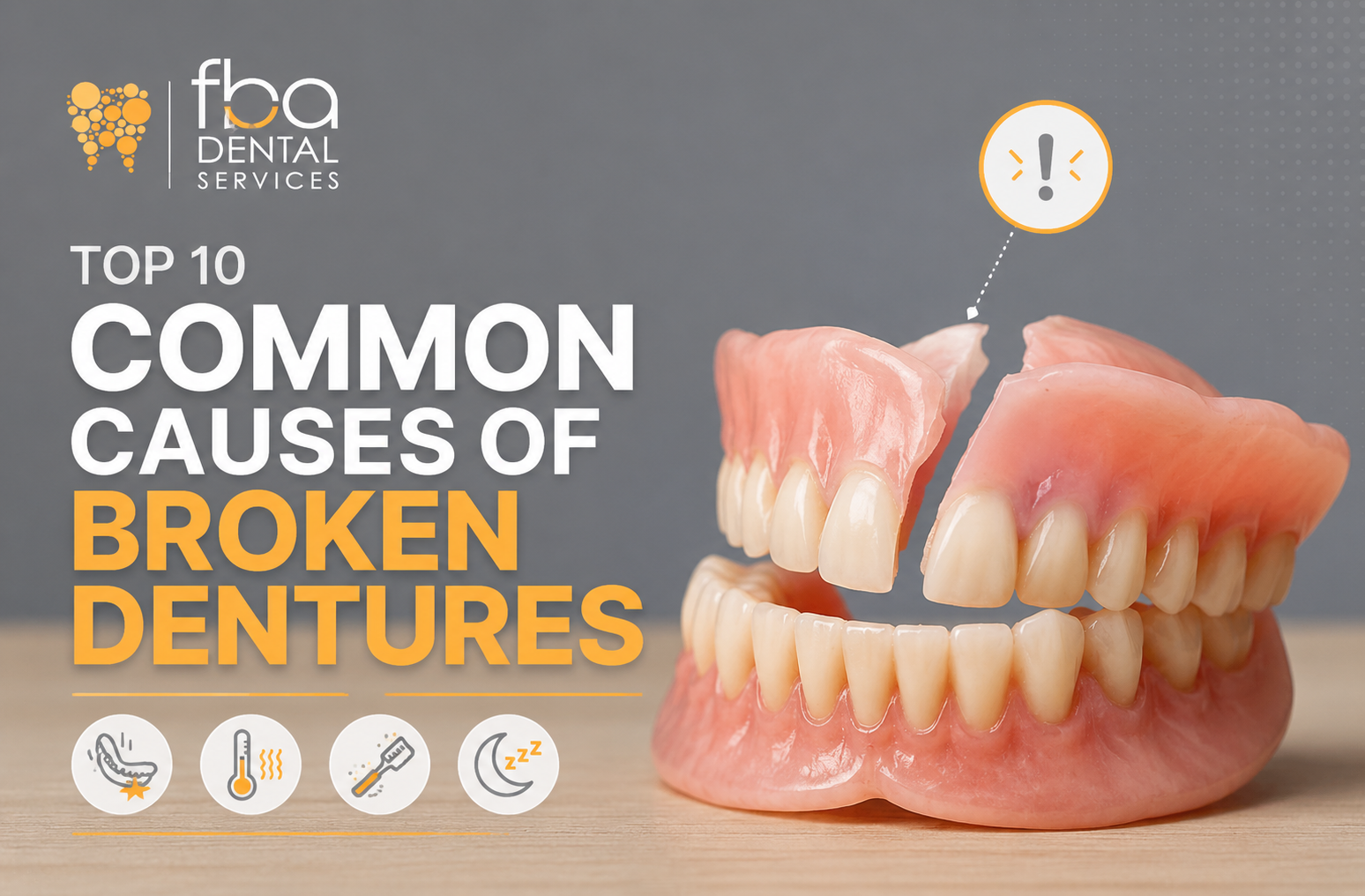

Ask anyone who wears dentures, and they will tell you the same thing. The day they crack is never a convenient one. You are halfway through dinner, or rushing to clean them before bed, and suddenly there is a fracture line where there should not be one.
Broken dentures are far more common than most realise. One clinical study found that about 63% of denture wearers had experienced some form of denture fracture, with midline cracks being the most frequent type. So if yours have snapped, chipped, or split, you are in good company.
What are Broken Dentures
Broken dentures are broken plates that have cracked, chipped, or split apart. The damage can be small, like a chip on one of the false teeth, or serious, like the pink base snapping in two. Either way, a broken denture makes it harder to eat and speak, and the rough edges can rub your gums raw.
Let’s go through the ten reasons dentures break easily and what you can do about each one.
1. Dropping Them (The Number One Cause)
This is one of the biggest causes. It happens to almost everyone at some point.
You take your dentures out over the bathroom sink, your grip slips, and they hit the porcelain or tile. Acrylic is tough, but it’s not indestructible. A drop of even a couple of feet onto a hard surface is often enough to chip a tooth or crack the base.
Here is a simple fix that works: fill the sink with water or lay down a folded towel before you handle them. That way, if they slip, they land softly. It sounds almost too basic to matter, but it prevents a huge share of cracked dentures.
2. A Poor or Changing Fit
Your mouth is not static. After the tooth loss, your jawbone slowly shrinks through a process called resorption, and the gums change shape along with it. The denture that fit perfectly two years ago might not sit right today. When a denture fit isn’t even, it flexes a little every time you bite down.
That repeated bending creates stress points, and stress points turn into cracks. If your dentures feel loose, rock when you chew, or rub sore spots, don’t wait. A denture reline, or refit, is far cheaper than a full replacement.
3. Everyday Wear and Tear
Dentures take a beating you probably never think about. Biting, chewing, hot coffee, cold water, acidic foods, the constant moisture of your mouth. All of it slowly fatigues the acrylic.
Most dentures are built to last somewhere between 5 and 10 years. Push past that, and the material naturally gets more brittle. An older denture can crack from forces that a newer one would shrug off without a problem. This is just age catching up, and it’s one of the most common denture problems out there.
4. Biting into Hard or Sticky Foods
Traditional dentures rest on your gums and rely on suction. They were never made to crush ice or rip through tough, chewy food.
Some of the worst offenders:
- Ice cubes (chewing these is a leading cause of cracked teeth and dentures alike).
- Hard candy and nuts.
- Sticky toffee or caramel, which can yank a partial loose.
- Tough cuts of meat that demand heavy grinding.
You don’t have to give up everything you love. Just cut food into smaller pieces, chew on both sides to balance the pressure, and go easy on anything that makes you really work your jaw.
5. Cleaning With Hot Water
This one catches a lot of people off guard. Hot water seems like it would clean better, right?
The problem is that heat warps acrylic. Even water that’s a little too hot can distort the shape of your denture just enough to ruin the fit, and a warped denture flexes wrong and cracks faster. Stick to cool or lukewarm water for both cleaning and soaking. Never pour boiling water over them to sanitise.
6. Using the Wrong Cleaning Products
Reaching for regular toothpaste or a stiff toothbrush feels natural. It’s a mistake, though. Most toothpastes are abrasive. They are made to scrub enamel, not soft denture acrylic, and over time, they scratch tiny grooves into the surface. Those scratches collect bacteria and weaken the material. Same story with bleach, which can lighten and degrade the acrylic.
Use a soft-bristled denture brush and a cleanser made specifically for dentures. That’s it. Gentle and consistent beats harsh and occasional every time. If you wear an acrylic denture, this gentle-cleaning rule matters even more, since the material scratches easily.
7. Letting Them Dry Out
Dentures are meant to stay moist. When you leave them sitting out on the counter or in a denture case over a long period of time, the acrylic dries, and becomes brittle.
A very dried-out denture is a denture waiting to crack. Whenever they’re not in your mouth, they should be soaking in cool water with a denture solution or left in a container slightly damped. Treat the storage cup like part of your nightly routine, and you will dodge a whole category of breakage.
8. Teeth Grinding (Bruxism)
If you clench or grind your teeth, especially while you sleep, your dentures absorb all that force. And it’s a lot of force. Grinding generates pressure well beyond normal chewing, and it does it for hours at a stretch.
That kind of sustained stress wears teeth down flat and can crack the base. If you wake up with a sore jaw, talk to your dentist. A custom mouthguard or night guard can protect both your dentures and your jaw.
9. DIY Repairs and Super Glue
I get the temptation. A denture snaps on a Sunday, the clinic’s closed, and there’s a tube of super glue right there in the drawer.
Please don’t. Household glues contain chemicals that aren’t safe for your mouth, and they rarely bond properly. Worse, a sloppy home fix throws off the alignment, which means the denture flexes unevenly and breaks again, often worse than before. At-home repair kits exist for genuine emergencies, but treat them as a stopgap for a day or two, not a real solution. Proper broken denture repair needs a professional.
10. Skipping Regular Dental Checkups
Most denture failures don’t happen out of nowhere. There are warning signs: a hairline crack, a spot that’s started to rub, a fit that’s gone slightly loose. The trouble is, you often can’t see or feel them until it’s too late.
Regular checkups catch these small issues early. Your dentist can spot a stress fracture before it splits all the way through and can reline a loose denture before the flexing does real damage. Skip those visits, and small problems quietly grow into broken ones.
How to Fix Broken Dentures the Right Way
So they broke anyway. It happens. Here’s what to actually do.
1. First, stop wearing them
A broken denture has sharp edges that can cut your gums or tongue. Gather every piece, even the tiny fragments, and store them safely in a bag or container.
2. Then call your dental professional
Depending on the damage, fixing broken dentures might take anywhere from a same-day denture repair and fracture fix for a simple crack to a few days for a lab rebuild. Bring all the pieces with you. The more your dentist has to work with, the cleaner the repair.
3. And resist the urge to test a home fix first
A failed DIY attempt can make professional repair harder and more expensive.
FAQ
Can a broken denture be repaired, or do I need a new one?
Yes, broken dentures can usually be repaired, especially clean cracks or a single broken tooth. A professional can often turn around simple fixes the same day.
How long should a set of dentures las
Typically 5 to 10 years with good care. After that, the acrylic gets brittle, and the fit drifts as your jaw changes, so breakage becomes more likely.
What’s the single best way to stop dentures from breaking?
Handle them over water or a towel, keep them moist, clean them gently, and get regular checkups. Most breaks trace back to one of those four basics.
Can a dentist fix my broken dentures?
Yes, dentists fix most broken break, they repair it in-office or via lab.
Why do my dentures keep breaking in the same spot?
A repeated crack in the same place almost always means a fit issue. The denture is flexing at that point under bite pressure. A reline, or refit, fixes the underlying cause so the repair actually holds.