
Facing tooth extraction can be daunting enough without the added worry of walking around without teeth while your mouth heals. Fortunately, that’s rarely necessary. Immediate dentures after tooth extraction allow patients across NSW to leave the dental chair with a functional, natural-looking smile on the very same day their teeth are removed — no gap, no waiting period, no self-consciousness in between appointments.
This approach has become a trusted solution for patients transitioning out of damaged or failing teeth, offering both a practical and psychological advantage over delayed denture placement. But immediate dentures involve a distinct process, different healing considerations, and a few adjustments worth understanding before extraction day arrives. This guide walks through exactly what to expect — from the initial planning appointment through to the healing time for immediate dentures — so you can approach the experience with confidence rather than uncertainty.
What Are Immediate Dentures?
Immediate dentures are a type of denture fitted on the same day natural teeth are extracted, rather than after the gums have fully healed. Unlike conventional dentures, which require weeks of healing before fitting begins, immediate dentures are custom-made in advance based on impressions and measurements taken before extraction.
This means patients never experience a toothless period. The denture is placed immediately after extraction, protecting the extraction sites and allowing normal function — eating, speaking, and smiling — to continue with minimal interruption.
Who Are Immediate Dentures Suitable For?
- Patients having all remaining teeth extracted in one or both arches
- Those transitioning from badly damaged, decayed, or periodontally compromised teeth
- Patients who want to avoid any visible gap during the healing period
- Anyone exploring broader missing teeth solutions who prefer a same-day transition over a staged approach
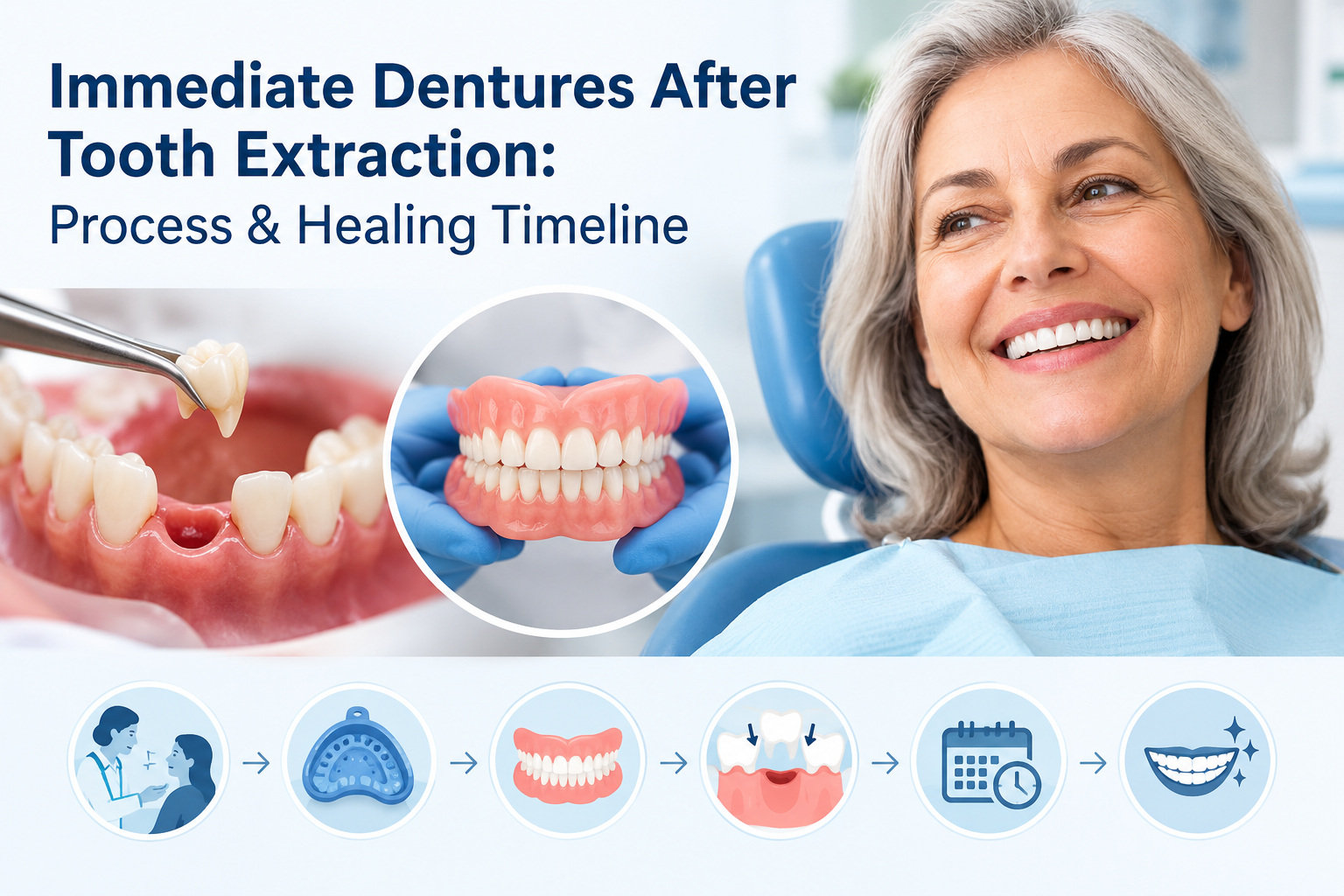
The Immediate Dentures Process, Step by Step
Understanding the immediate dentures process helps set realistic expectations, since the timeline differs meaningfully from standard denture treatment.
- Initial consultation and planning. Your dentist examines the mouth, discusses extraction needs, and begins planning the denture design well before extraction day.
- Impressions and measurements. Dental impressions, bite registration, and sometimes digital scans are taken while natural teeth are still present, allowing the denture to be fabricated to match your natural bite and facial proportions.
- Denture fabrication. The dental laboratory constructs the denture using these pre-extraction measurements, estimating how the gums will appear once teeth are removed.
- Extraction and immediate placement. On the day of surgery, teeth are extracted and the prepared denture is fitted immediately, often within the same appointment.
- Initial healing and adjustment period. The denture acts as a protective covering over healing extraction sites while the patient adapts to wearing it full-time in the early days.
Why the Fit Changes Early On
Because immediate dentures are designed before extraction, they’re built to fit the gum tissue as it exists with teeth still present — not the healed, reshaped gum ridge that follows extraction. As swelling subsides and the gums contract over the following weeks, some looseness is expected and entirely normal.
Healing Time for Immediate Dentures
Healing time for immediate dentures varies between patients, but general timelines provide a useful guide.
| Healing Stage | Approximate Timeframe | What to Expect |
| Initial healing | First 1–2 weeks | Swelling, tenderness, denture worn almost continuously |
| Early adjustment | 2–6 weeks | Gum shrinkage begins, minor looseness may appear |
| Soft tissue stabilisation | 6–12 weeks | Gums settle into a more consistent shape |
| Bone remodelling | 3–6 months | Continued subtle changes beneath the gum line |
| Reline or permanent denture | Around 6 months | Refitting or replacement typically recommended |
During the first 24 hours, dentists generally recommend leaving the denture in place continuously, only removing it briefly for gentle cleaning, to help control swelling and support clot formation at the extraction sites.
Caring for Temporary Dentures After Extraction
Temporary dentures after extraction require a slightly different care approach compared to conventional dentures, particularly in the early healing phase.
- Avoid removing the denture frequently in the first day or two, as this can disturb healing tissue.
- Rinse gently with warm salt water, rather than vigorous brushing, around extraction sites initially — a practice also recommended in NSW Health’s official post-extraction care advice.
- Expect some discomfort, which is normal; understanding general denture pain relief options can help manage early soreness effectively.
- Stick to softer foods during the first one to two weeks while gums heal.
- Attend all follow-up appointments, as your dentist will monitor fit and healing progress closely.
When a Reline or Replacement Becomes Necessary
Because gums continue reshaping for months after extraction, most immediate dentures require a reline once healing stabilises, typically around the three-to-six-month mark. This is a normal and expected part of the process rather than a sign anything has gone wrong. Patients can review a complete guide to denture relining to understand what this adjustment involves and why it matters for long-term comfort.
In some cases, patients transition from their immediate denture into a final, more precisely fitted denture once the gums have fully settled, ensuring optimal comfort and function for years to come. If you’re planning for this stage, our denture clinic team can guide you through both the immediate and long-term phases of treatment under one roof.
Final Thoughts
Immediate dentures after tooth extraction offer a practical, confidence-preserving solution for patients facing tooth removal, allowing normal daily life to continue without an awkward toothless gap. While some adjustment and a later reline are typically part of the journey, the process is well-established and predictable when guided by an experienced dental team. Understanding each stage — from initial impressions through to post-extraction healing — helps patients approach treatment with clarity and confidence, setting the foundation for a comfortable, long-term denture outcome.