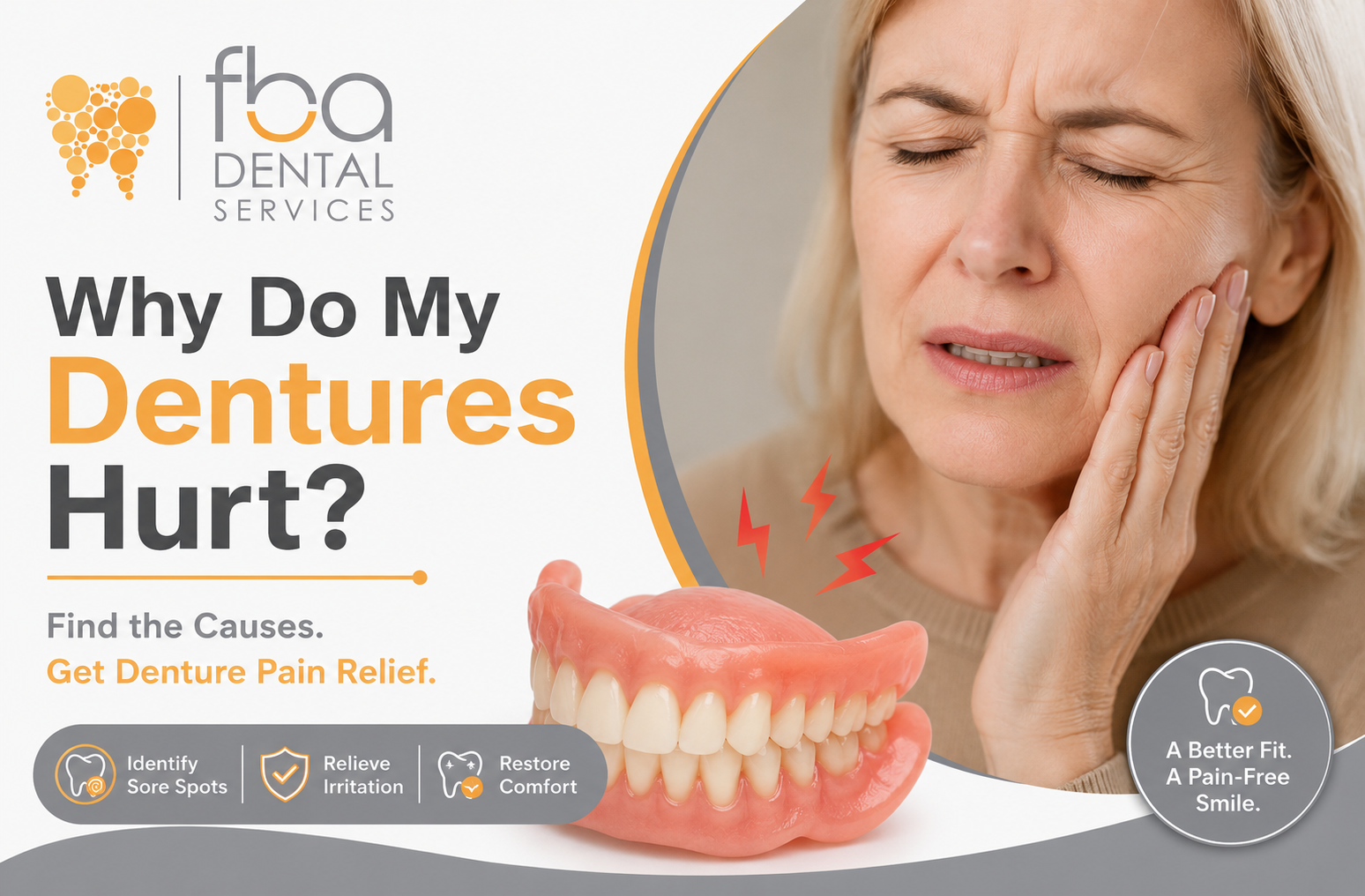

If your dentures hurt, you are not doing anything wrong, and you are not stuck with them. Some soreness is normal when your dentures are brand new, but ongoing pain almost always has a cause you can fix.
Most denture pain comes from a poor fit, and the fix is usually a simple reline or adjustment at your dentist. Below, we will go through why dentures hurt, how to get denture pain relief at home, and when it’s time to see a professional. If the pain doesn’t settle, the team at FBA Dental Services can check the fit and sort out the cause.
Is It Normal for Dentures to Hurt?
A little discomfort in the first few weeks with a new set is normal. Your gums and cheeks are learning to hold something that was not there before, and sore spots can pop up while everything settles in.
What is not normal is pain that sticks around, comes back, or starts months or years after you have been wearing the same dentures comfortably. That kind of denture irritation is a sign something needs attention, not something to just put up with.
Common Reasons Your Dentures Hurt?
Denture pain usually comes down to one of these causes:
- A poor or changing fit: After you lose teeth, your jawbone slowly shrinks. Over time, dentures that once fit perfectly start to rock, slip, and rub, which is the number one cause of sore gums.
- New Dentures still settling in: Fresh dentures often need a few adjustments before they feel right.
- Food trapped underneath: Bits of food caught between the denture and your gum press in and create painful spots.
- Sleeping in Your Dentures: Wearing them overnight gives your gums no rest and raises your risk of soreness and infection.
- Poor Cleaning: A denture that is not cleaned well can hold bacteria or fungus, leading to sore, inflamed gums.
- Gum disease or infection: Sometimes the pain comes from your gums themselves, not the denture.
How to Stop Denture Pain At Home?
While you wait to see your dentist, these steps ease denture sore spots, but they are temporary relief, not a cure.
- Take your dentures out for a while: Give your gums a proper rest, especially overnight.
- Rinse with warm salt water: A simple salt-water rinse a few times a day soothes sore, irritated gums.
- Clean your dentures and gums gently: Brush your dentures with a soft brush, and wipe your gums with a soft cloth to clear away bacteria and trapped food.
- Skip harsh mouthwash: Alcohol-based rinses sting and can dry out sore tissue. Stick to salt water.
- Eat softer foods for now: Smaller bites and softer textures take pressure off tender spots.
- Use adhesive only as a short-term help: A little denture adhesive can steady a slightly loose plate, but it won’t fix a real fit problem.
How to Fix The Problem
Trying to fix the problem the wrong way often makes it worse, so there are a few things worth avoiding. Never file or trim your dentures yourself. It might seem like an easy way to smooth a sore spot, but you will throw off the fit and can damage them for good.
The same goes for super glue and DIY repair kits on a painful denture, since they don’t fix the underlying fit problem and can harm your mouth.
If a denture is genuinely damaged, leave it to a professional denture repair instead.
It’s also a mistake to simply ignore the pain, because a small sore spot left alone can slowly turn into an ulcer or an infection. And if you find yourself piling on more and more adhesive just to get through the day, that’s a sign the denture needs a proper reline, not another layer of paste.
When to See Your Dental Prosthetist?
Book an appointment if any of these apply to you:
- The pain lasts more than a week or two.
- You have raw spots, ulcers, or bleeding gums.
- Your dentures feel loose, wobbly, or click when you talk.
- You need adhesive just to get through the day.
- You notice swelling, a bad taste, or a white coating in your mouth.
Most of the time, the answer is a quick reline, adjusting the inside surface so it feels snug again, or a small tweak to smooth a pressure point. If your dentures are old or worn out, a new set may be the better choice. For people who deal with constant pain, implant-supported dentures clip firmly in place and stop the rubbing that causes sore gums. If you’re unsure what you need, book a consultation with our team, and we will take a look.
Final Thoughts
So, why do your dentures hurt?
Nearly always because of a fit that’s drifted over time, food or bacteria irritating, or a new set still settling in. The at-home tips above give you real denture pain relief in the short term, but the lasting fix is a proper check and reline from your dentist.
FAQs
Should I wear dentures if they hurt?
Stop wearing dentures that cause severe pain. Pushing through it can do real damage, leading to badly irritated gums, open sores, and infection.
What is the most common and biggest complaint with dentures?
One basic complaint with dentures is that they do not fit well. Your mouth and gum shapes will change over time, making the present dentures feel loose or uncomfortable to wear.
What is a better alternative to dentures?
Dental implants beat traditional dentures: they fuse to your jaw for a fixed, natural bite and prevent the bone loss dentures cause.
Can I use painkillers or numbing gel for denture pain?
They can take the edge off for a short while, but they don’t fix the cause. If you need them regularly, see your Dental Prosthetist about the fit.
When should I worry about denture pain?
See a Dental Prosthetist if the pain lasts more than a week or two, you have sores or bleeding, your dentures feel loose, or you notice swelling or a bad taste.