
If your dentures have started feeling loose, uncomfortable, or less secure than they used to, you may not necessarily need a completely new set. In some cases, a denture reline can improve the fit by updating the surface of the denture that rests against your gums.
When researching soft reline vs hard reline for patients in New South Wales , it is important to understand that these are two different denture relining options designed for different situations.
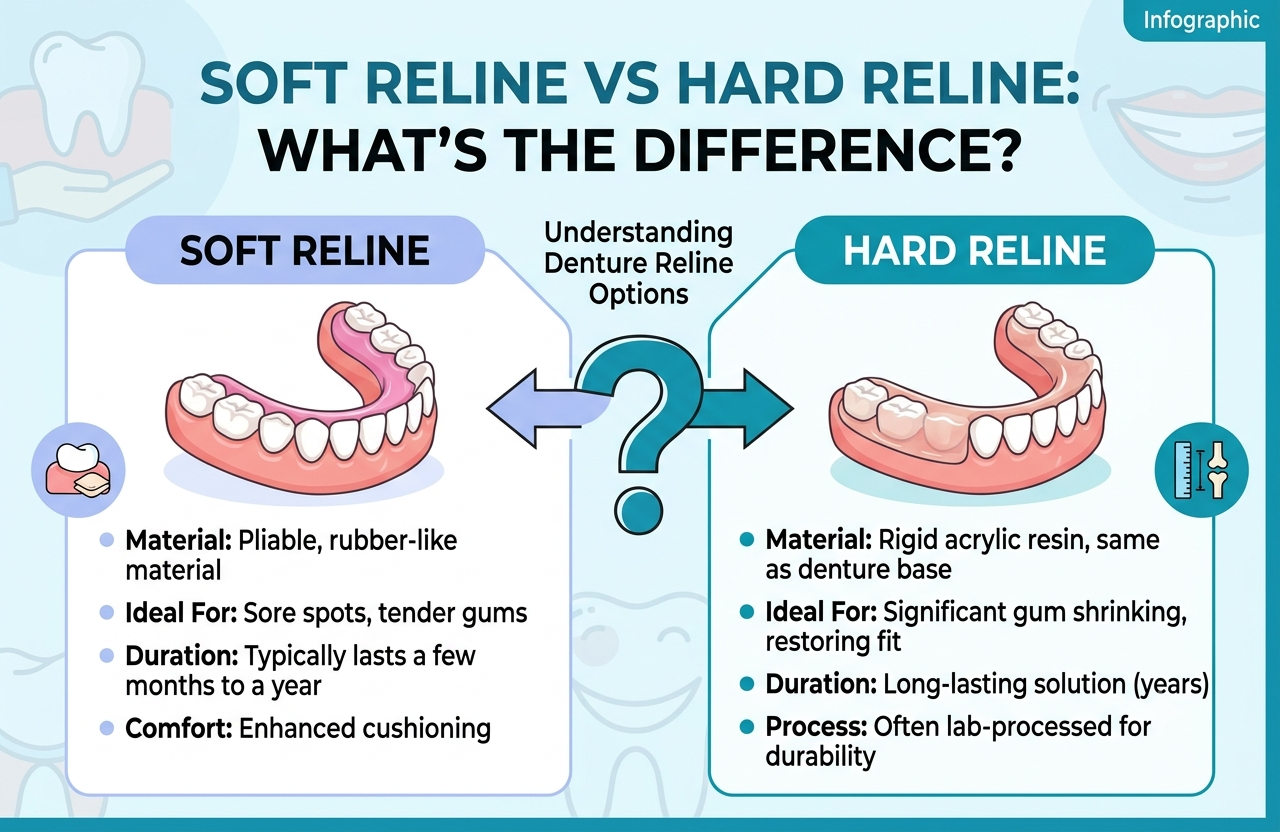
A soft reline uses a cushioning material to create a more comfortable surface. In contrast, a hard reline replaces the fitting surface with a more rigid material designed to match the current shape of your gums closely.
So, which option is better? The answer depends on your mouth, your existing denture, and why you are experiencing discomfort or poor fit.
What Is a Denture Reline?
A denture reline is a procedure used to improve how an existing denture fits against the gums and underlying tissues. Over time, your mouth can change. The gums and bone supporting a denture may gradually alter in shape, meaning a denture that once fitted well may become loose or uncomfortable.
Healthdirect explains that dentures may require adjustments over time and recommends seeing a dentist or dental prosthetist if your dentures become uncomfortable or cause problems such as soreness or ulcers. The NSW Dental Board (part of the Dental Board of Australia) requires registered dental prosthetists to hold the appropriate qualifications to carry out denture relines, so it’s worth confirming your provider’s registration.
Instead of replacing the entire denture, a reline may sometimes be considered when the denture itself is still suitable.
What Is a Hard Denture Reline?
A hard reline involves replacing the fitting surface of the denture with a rigid acrylic material.
The denture is adjusted to correspond more closely with the current shape of your gums. Because the material is firm, it provides a stable fitting surface and is generally designed for longer-term use.
A hard reline may be considered when:
- Your existing denture has become loose
- Your gums have changed shape over time
- The denture teeth and overall structure are still suitable
- You need improved stability
- Your dental prosthetist determines that a rigid fitting surface is appropriate
Hard relines are commonly used when the main issue is the changing fit of an otherwise serviceable denture, rather than damage that would require denture repair.
What Is a Soft Denture Reline?
A soft reline uses a flexible or cushioning material on the fitting surface of the denture.
The softer surface can provide additional cushioning between the denture and sensitive gum tissue. This may be useful for people who experience discomfort when wearing a conventional hard denture, including patients who spend long hours outdoors in the NSW climate and find dry conditions add to gum sensitivity.
A soft reline may be considered for patients who have:
- Sensitive or easily irritated gums
- Thin or delicate gum tissue
- Areas where a hard denture creates pressure
- Difficulty tolerating a rigid denture base
- Particular clinical circumstances where additional cushioning is beneficial
However, soft materials can require more maintenance and may not be suitable for every patient.
Soft Reline vs Hard Reline: The Main Differences
Understanding the difference between the two options can make your consultation easier.
| Feature | Soft Reline | Hard Reline |
| Material | Flexible and cushioning | Rigid acrylic |
| Main benefit | Comfort and cushioning | Fit and stability |
| Suitable for | Sensitive or tender tissues in suitable cases | Improving the fit of an existing denture |
| Feel | Softer against the gums | Firmer |
| Durability | Generally requires more maintenance | Generally more durable |
| Cleaning | Requires careful hygiene | Easier to maintain when properly finished |
The right choice should be based on your individual circumstances rather than simply choosing the option that sounds more comfortable.
How Does the Denture Reline Procedure Work?
The exact process can vary depending on the type of reline and your individual needs.
Generally, your dental prosthetist will first assess your existing denture and examine the tissues in your mouth. They will determine whether the denture is suitable for relining or whether a replacement would provide a better result.
A fitting impression may then be taken to capture the current shape of your mouth. The denture is subsequently modified using the appropriate reline material.
Before the reline is completed, your dental prosthetist will assess the fit and make any necessary adjustments.
The purpose is to create a better relationship between the denture and your current oral anatomy.
Does a Reline Mean I Need New Dentures?
Not always. A reline can be a useful option when the existing denture is structurally sound, the teeth are still in reasonable condition, and the main problem is that the fitting surface no longer matches your gums.
However, a reline may not be appropriate if the denture is severely worn, damaged, poorly designed, or no longer suitable for your needs.
In those situations, a new denture from denture clinic may provide a better long-term solution.
This is why having your denture assessed by a qualified dental prosthetist in NSW is important before deciding between relining and replacement.
Which Is Better: Soft or Hard Reline?
There is no universal answer to soft vs hard denture reline.
A hard reline may be preferable when improved fit and stability are the primary concerns and your tissues can tolerate a rigid denture surface.
A soft reline may be considered when cushioning and comfort are particularly important.
Your dental prosthetist can assess your gums, existing denture and symptoms before recommending the appropriate option.
When Should You Have Your Dentures Checked?
Do not ignore ongoing discomfort simply because you have become accustomed to wearing dentures.
You should arrange a professional assessment if your dentures:
- Feel increasingly loose
- Cause persistent soreness
- Rub against your gums
- Make eating difficult
- Move when you speak
- Cause recurring ulcers
- Have become uncomfortable after years of use
NSW Health guidance recommends seeking professional advice for sore mouths, bleeding gums, swelling, or ulcers associated with dentures.
Final Thoughts
Choosing between a soft reline and hard reline is not simply a matter of comfort versus durability. The best denture relining option depends on the condition of your existing denture, the health of your gums, and the reason your current denture is no longer fitting properly.
A professional assessment can determine whether a soft reline, hard reline, adjustment, or completely new denture is the most suitable option.
If your dentures have become loose or uncomfortable, speak with the team at FBA Dental Services about your available denture relining options.
Frequently Asked Questions
How long does a denture reline last?
The lifespan depends on the type of reline, the condition of the denture, and changes in your mouth. Your dental prosthetist can advise how often it may need to be reviewed.
Is a soft reline more comfortable?
A soft reline can provide additional cushioning and may be more comfortable for some patients with sensitive or easily irritated tissues. It is not suitable for everyone.
Is a hard reline better than a soft reline?
Neither is automatically better. A hard reline may provide greater stability, while a soft reline can provide additional cushioning. Your dental prosthetist should recommend the appropriate option for your needs.
Can an old denture be relined?
Sometimes. If the denture is still structurally suitable and the main issue is poor fit, relining may be possible. Severely worn or damaged dentures may need replacement instead.