
Your dentures fit, you clean them every day, and yet the roof of your mouth looks red, feels tender, or tastes unpleasant. Plenty of Australian denture wearers have been there. Others notice nothing at all until a dental professional spots redness during a check-up.
That quiet nature is what makes denture stomatitis so easy to miss. It is one of the most common oral health problems among people who wear dentures, and it is very treatable once recognised. This guide explains what is happening under your denture, how to spot it, and what to do about it, including where to turn in Australia if you need help.
What Is Happening Under Your Denture?
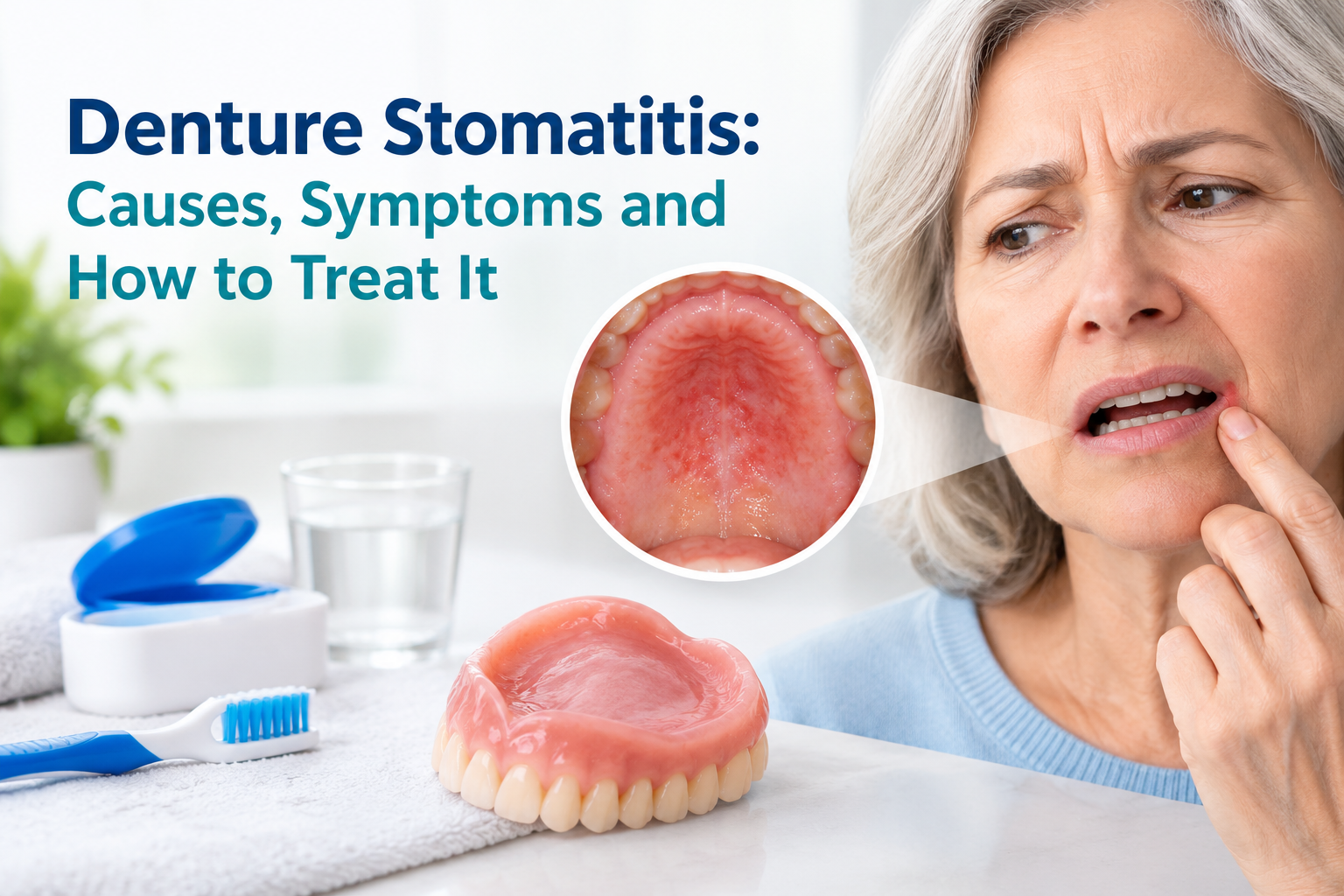
Denture stomatitis is inflammation of the gum and palate tissue covered by a denture. It most often affects the upper jaw, where the denture sits against the roof of your mouth.
The usual cause is a yeast called Candida albicans, which lives harmlessly in many mouths. Beneath a denture, though, the tissue is covered for hours, gets less cleansing saliva and sits against a slightly porous surface. That creates a warm, moist environment where yeast multiplies and forms a film on the denture, which then inflames the tissue below it. A peer-reviewed interdisciplinary clinical review identifies poor denture hygiene and wearing dentures overnight as the main drivers of this build-up.
Denture Sore Mouth: Signs to Watch For
Many people feel no pain at all. When symptoms do appear, they typically include:
- Redness under the denture, from pinpoint spots to a smooth, widespread “painted” look across the palate
- A puffy or bumpy palate
- Burning or tenderness, sometimes worse after eating
- A persistent bad taste or bad breath
- Dry mouth
- Cracked, sore corners of the mouth
- White patches that wipe away
Dental professionals often describe three stages:
| Stage | What it looks like | What it usually means |
|---|---|---|
| Mild | Small red dots on the palate | Early irritation, easily reversed |
| Moderate | Smooth, widespread redness under the denture | Established inflammation or yeast overgrowth |
| Advanced | Bumpy, granular tissue | Long-standing inflammation needing professional care |
Why Dentures Can Trigger Oral Thrush
Oral thrush from dentures rarely has a single cause. It usually builds from a combination of habits and health factors:
- Wearing dentures through the night, which gives the tissue no recovery time
- Cleaning only the outside of the denture, leaving plaque and yeast on the fitting surface
- A poorly fitting denture that rubs and weakens the tissue’s natural defences
- Dry mouth, a side effect of many common medications taken by Australians
- Smoking
- Diabetes, particularly when blood sugar is not well controlled
- Inhaled steroid medication, such as asthma preventers, if the mouth is not rinsed afterwards
- A recent course of antibiotics
A consistent denture cleaning routine removes most plaque and yeast before they can cause trouble. The most common gap is skipping the fitting surface, the side that actually touches your palate.
When a Poor Fit Is the Hidden Culprit
A loose or worn denture shifts slightly with every bite, and that friction irritates the palate. Because gums and jawbone keep reshaping for years after tooth loss, a denture that fitted well five years ago may now be working against you.
If your sore mouth keeps returning despite good hygiene, a denture reline may be the missing piece. Reshaping the fitting surface restores even contact and removes the pressure points that keep tissue inflamed.
Treatment Options Your Dental Professional or GP May Recommend
Treatment works on two fronts: clearing the yeast and removing whatever allowed it to grow.
- Get a proper diagnosis. In Australia you can start with a dentist, a dental prosthetist or your GP, who can confirm whether it is stomatitis or something else.
- Antifungal treatment. This is usually a gel, lozenge or rinse. Your pharmacist can explain which options are available over the counter and when a prescription is needed, which is worth asking about if you take other medicines.
- Disinfect the denture itself. Treating the mouth while leaving yeast on the denture just leads to reinfection.
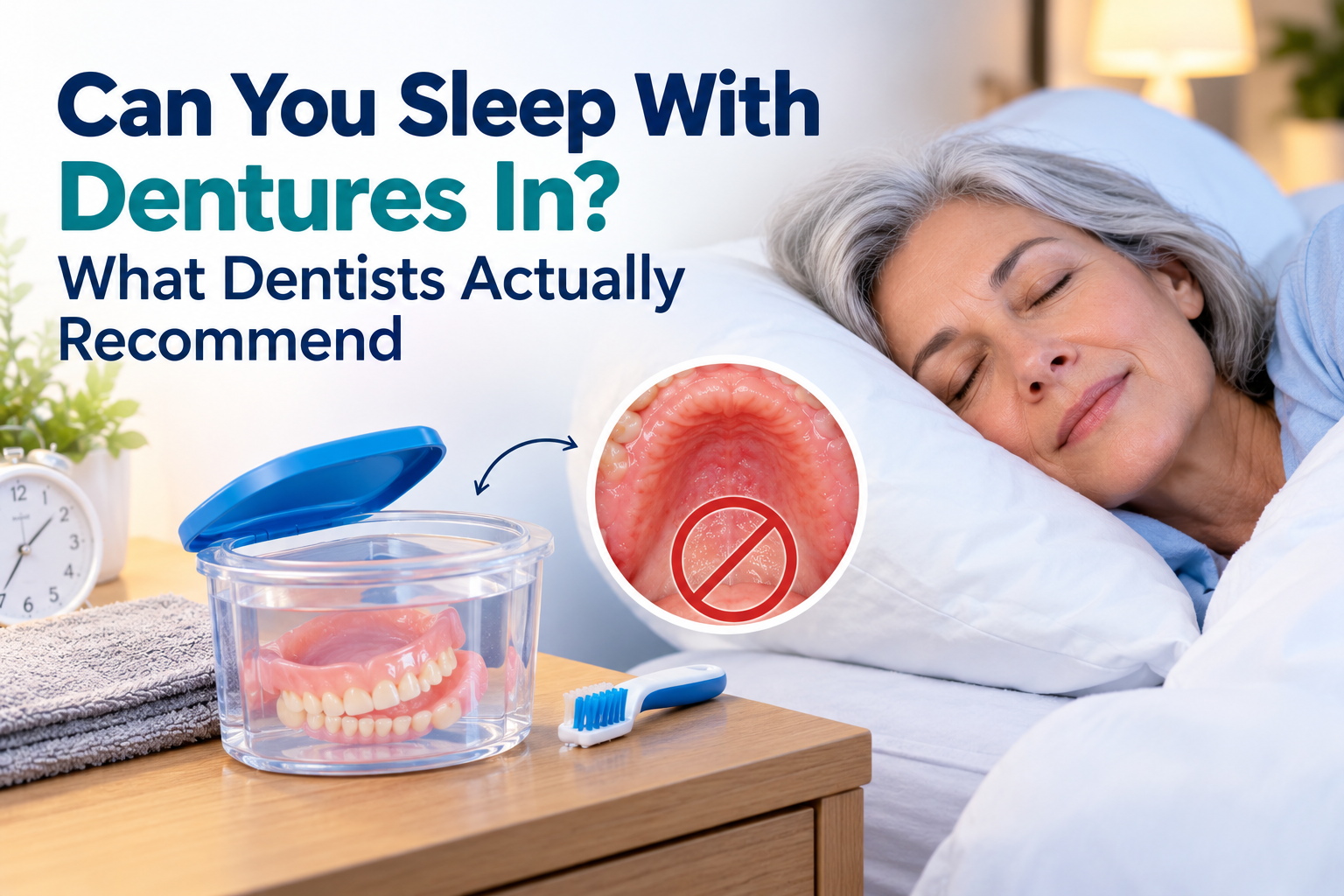
- Leave the denture out overnight, every night, while the tissue heals.
- Fix the fit by adjusting, relining or replacing the denture if it is contributing.
- Manage underlying factors such as dry mouth, smoking and blood sugar control.
Most people notice improvement within a couple of weeks, but the problem often returns if the cause is not addressed.
A Daily Routine That Keeps It From Coming Back
- Take your dentures out every night.
- Brush them thoroughly, inside and out, with a soft brush and a denture cleaner. Regular toothpaste can scratch acrylic, and scratches harbour yeast.
- Soak them as the cleaner’s label directs. Dentures with metal frameworks should not go in bleach-based products, which can corrode the metal.
- Gently brush your gums, palate and tongue each morning.
- Rinse after meals.
- See your dental provider at least once a year.
When to Get It Checked
Book an appointment if redness or soreness lasts more than a week or two despite good hygiene, or if you notice bleeding, swelling or trouble swallowing. Any mouth sore that has not healed within three weeks should always be examined.
Cost can be a barrier. Medicare does not cover most routine dental care, but state and territory public dental services assist eligible concession card holders, and waiting times vary by location. Private health extras cover may also contribute to check-ups, relines and new dentures, so check your policy limits. If you are unsure where to start, healthdirect’s nurse line on 1800 022 222 can point you to services near you.
Frequently Asked Questions
Is it contagious?
No. Candida already lives in many mouths, and the condition develops from the conditions under the denture rather than from catching it from someone else.
Can it clear up on its own?
Mild cases sometimes improve once dentures are cleaned properly and left out overnight. Without fixing the cause, though, it tends to return and can worsen, so an assessment is worthwhile.
How long does healing take?
Many people see improvement within one to two weeks of starting treatment and better hygiene. Advanced or long-standing cases can take longer, and recurrence is likely if fit or hygiene issues remain.
The Takeaway
This condition is common, often painless early on, and very treatable. It is driven by a handful of fixable factors: overnight wear, incomplete cleaning, poor fit and underlying health conditions. Check your mouth regularly, keep the daily routine consistent, and have your dentures assessed when anything changes.