
Picture laughing at the dinner table, biting into an apple, or giving a speech without a thought about your lower denture shifting. For many Australians who wear dentures, a loose lower denture is a daily frustration. It slides when they chew, rubs their gums and turns meals into a worry.
Snap in dentures are designed to solve exactly that. Rather than relying on suction and adhesive, they click onto dental implants anchored in the jaw. This guide explains how the system works, who suits it, what the treatment involves in Australia, and how to look after it.
What Exactly Is a Snap-On Denture?
It is a removable denture that attaches to dental implants, small titanium posts placed in the jawbone. A conventional denture rests on the gums, while this one is held by secure attachments. You still take it out to clean it, but while it is in your mouth, it stays put.
You may also hear them called implant-retained overdentures. They sit between conventional dentures and fixed implant teeth in terms of stability, complexity and cost.
How Do Clip-On Dentures Work?
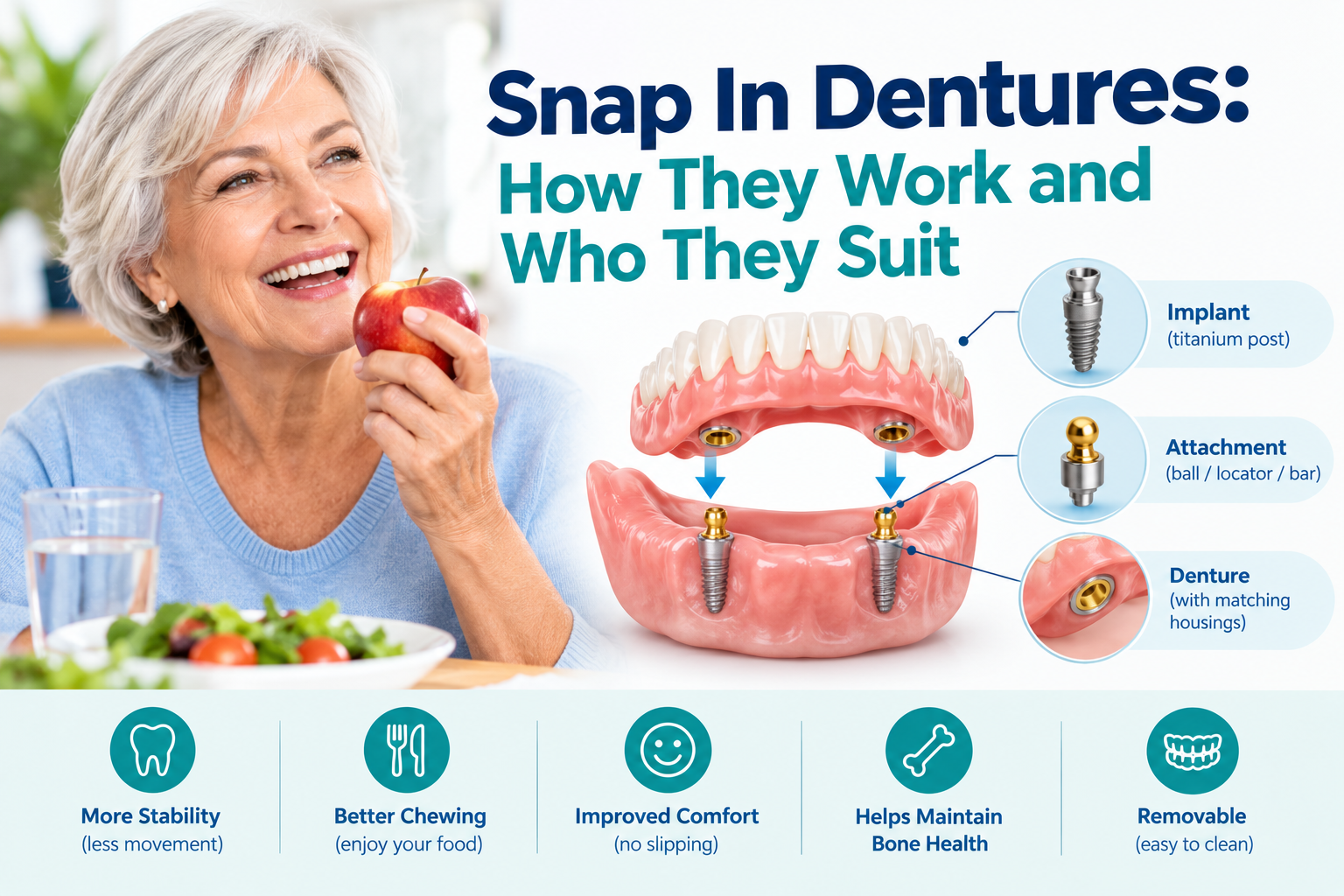
The system has three parts:
- Implants. Titanium posts are placed in the jawbone and, over a healing period, fuse with the bone in a process called osseointegration.
- Attachments. Small connectors sit on top of the implants. Common types include ball attachments, low-profile locator attachments and bars that join several implants.
- The denture. The underside contains matching housings, usually with small replaceable inserts, that click onto the attachments.
To clean it, you pull the denture off. To put it back, you press down until it clicks.
Why the Lower Jaw Benefits Most
Lower dentures are the hardest to keep stable. The tongue takes up space, and the lower ridge is narrower than the upper palate, which gives the denture less to grip. That is why two implants are widely used to secure a lower denture, and why many people with lower jaw problems notice the biggest improvement.
Upper dentures cover the palate, so they usually hold better without help. When implants are used in the upper jaw, more are generally needed, often around four, because the bone tends to be softer. Your dentist will advise what suits your jaw after scans.
Clip-In Comfort vs Conventional Dentures
| Implant-retained | Conventional denture | |
| Stability | Firm, minimal movement | Relies on suction, fit and adhesive |
| Chewing | Noticeably stronger bite | Often limited |
| Surgery | Required for implants | None |
| Bone support | Implants can help limit bone loss around them | Bone continues to reshape |
| Maintenance | Replace inserts, attend regular reviews | Reline as gums change |
| Cost | Higher | Lower |
| Timeline | Several months, sometimes longer | Weeks |
If you are comparing the broader options, our guide on dentures vs implants covers where this middle option fits.
Who Is a Good Candidate?
Suitability depends on your mouth and your general health. Dental professionals look at:
- Bone volume and density, usually assessed with a 3D scan
- Gum health, since gum disease needs treating first
- General health, including diabetes control and any medications or treatments that affect bone healing
- Smoking, which raises the risk of implant failure
- Realistic expectations and your ability to keep up with cleaning and review visits
Some people with low bone volume may still be suitable after a bone graft, but your dentist or surgeon will advise.
The Treatment Journey in Australia
- Assessment and planning. Examination, scans, a discussion of your goals and a review of your current denture.
- Implant surgery. In Australia this is done by a dentist, or a specialist such as an oral surgeon or periodontist, under local anaesthetic, sometimes with sedation.
- Healing. Commonly several months, though some cases allow earlier loading.
- Attachments and denture. Your denture is made or modified to fit the attachments, by a dentist, a prosthodontist or a dental prosthetist working with a dentist.
- Review visits. Fit and implant health are checked and adjustments made.
Our implant retained dentures service explains how this process works at our clinic.
Cost and Funding
Implant treatment is a significant investment, usually quoted in the thousands of dollars, and fees depend on the number of implants, scans, the practitioner and the attachment type. Medicare does not generally cover implants, and private health cover varies widely, with many extras policies capping or excluding implant items. Ask for a written, itemised plan covering surgery, the denture and ongoing maintenance, and check your fund before committing.
Looking After Your Dentures and Implants
Aftercare is simple but needs consistency:
- Remove the denture each night and clean it as you would any denture.
- Clean the attachments and brush around the implants carefully with a soft or interdental brush.
- Replace worn inserts when your dentist recommends, often every year or so, as they lose their grip.
- Attend regular reviews, because the gums around implants need monitoring as much as natural teeth do.
- Avoid smoking, which affects healing and long-term implant health.
Signs of a problem include bleeding, swelling, a bad taste or looseness around an implant. Book a visit promptly if you notice any of these, as early treatment of implant gum disease is far easier. This matters because a 20-year review of implant treatment at an Australian public dental clinic found a high overall implant survival rate, but also showed that implants supporting lower overdentures carried a higher risk of failure than those supporting single crowns, so ongoing monitoring is worthwhile.
Frequently Asked Questions
Are they permanent?
No. You can remove them yourself, which makes cleaning easier. A fixed option, where teeth are screwed on and not removed, is a different treatment.
Is the surgery painful?
Implants are placed under local anaesthetic, so you should not feel pain during surgery. Soreness, swelling and tenderness for a few days afterwards are common, and most people manage with the pain relief their dentist advises.
How long do they last?
With good care, implants can last many years. The denture itself typically needs replacing after about a decade, and the small inserts wear faster and need regular replacement.
The Takeaway
Implant-retained dentures offer a practical middle ground for people whose conventional dentures never feel secure. They suit lower jaws particularly well, and people with enough bone and good oral health. They take longer and cost more than conventional dentures, but the improvement in comfort and chewing can be significant. A thorough assessment is the best first step, so ask plenty of questions before committing.