
If traditional dentures have left you with sore gums or you hate the look of metal clasps, flexible dentures are worth knowing about. They are a lighter, softer alternative, and for many people, they solve the very problems that make regular partials so annoying to wear.
But they are not right for everyone. Here is an honest look at the Benefits of flexible dentures, where they fall short, and who they actually suit.
What Are Flexible Dentures
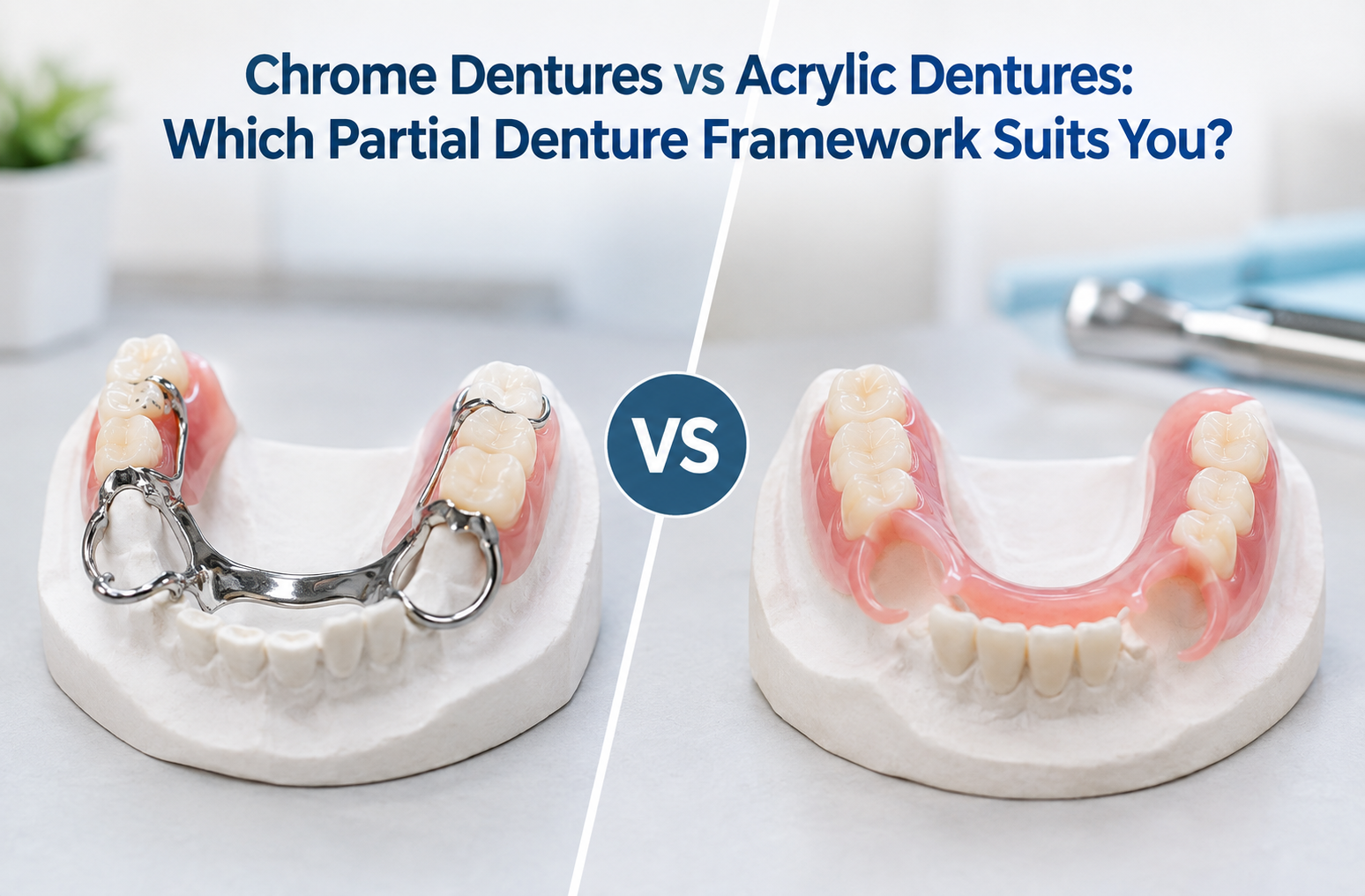
Flexible dentures are removable partial dentures made from a soft, bendy thermoplastic material instead of hard acrylic and metal. The base flexes to match the shape of your gums, and thin gum-coloured extensions grip your natural teeth, so there are no metal clasps at all.
They are mainly used to replace a few missing teeth rather than a full arch. That distinction matters, and we will come back to it.
Tooth loss is a significant oral health issue in Australia, particularly among older adults. According to the Australian Institute of Health and Welfare (AIHW), around 1 in 10 Australians aged 15 and over have no natural teeth, while the average adult has lost several teeth due to decay, gum disease, or injury. As more Australians seek practical and natural-looking ways to replace missing teeth, flexible partial dentures have become an increasingly popular treatment option.
Advantages of Flexible Dentures
Here are the main advantages of flexible dentures compared with the traditional acrylic-and-metal kind.
- Much more comfortable: The soft base moulds to your gums instead of pressing against them, so you get fewer sore spots and pressure points. If rigid dentures have rubbed you raw, this is the big win.
- No metal clasps: The gripping parts are made from the same gum-coloured material, so nothing metallic shows when you smile.
- They look natural: The base is thin and translucent, letting your real gum colour show through rather than sitting on top as a slab of pink acrylic.
- Harder to break: Because the material bends, a drop that would crack an acrylic denture usually won’t shatter a flexible one.
- Lightweight and easy to adjust to: They are thin and light, so most people get used to them faster than a bulky traditional partial.
- No adhesive needed: The snug fit usually holds on its own, which means no daily paste.
- Metal-free and BPA-free: A genuine plus if you have had a reaction to metal in your mouth.
- Faster to Make: They typically need fewer appointments and less lab time than a traditional partial.
Flexible Dentures for Front Teeth
This is where flexible dentures really shine. When you are replacing teeth at the front of your mouth, appearance matters more than anywhere else, and metal clasps on a traditional partial are hard to hide when you smile or talk.
Flexible dentures for front teeth solve that. The clasps blend into your gum line, the base is translucent, and there is no metallic glint. For a single missing front tooth or a small gap in the smile line, they are one of the most discreet removable options available.
The Cons of Flexible Dentures
There are real trade-offs, and any dentist worth their salt will walk you through these. Here are some cons of flexible dentures:
- Hard to repair or adjust: This is the biggest drawback. The thermoplastic does not bond well, so relines, rebases, and repairs are difficult. If one breaks, you often need a whole new denture rather than a simple fix.
- They can hold bacteria: The softer, slightly porous surface is friendlier to bacteria than smooth acrylic, so daily cleaning is not optional. Skip it, and you risk gum inflammation.
- They may stain over time: Coffee, tea, red wine, and smoking can discolour the material, and it doesn’t polish back up the way acrylic does.
- They don’t stop bone loss: Like all removable dentures, they sit on your gums. They don’t stimulate the jawbone, so bone shrinkage continues underneath.
- Not a permanent solution: They usually last a few years rather than a lifetime, and the fit will drift as your mouth changes.
- Not for every case: They are generally unsuitable for full arches or cases where a very firm, stable bite is needed.
- Cost more than basic acrylic: They typically sit above a standard acrylic partial in price, though below implants.
Flexible Vs. Traditional Dentures at a Glance
| Features | Flexible Dentures | Traditional Acrylic Partials |
| Comfort | Softer, fewer sore spots | Rigid, can rub |
| Appearance | No visible metal | Metal clasps often visible |
| Breakage Risk | Low, bends instead of cracking | Higher, cracks if dropped |
| Repairs & Relines | Difficult, often needs replacing | Straightforward |
| Staining | More prone | Less prone |
| Best For | Front teeth, small gaps, metal allergies | Full arches, cases needing rigidity |
Who Should Get Flexible Dentures
They are a strong fit if you:
- Are replacing one or a few teeth, especially at the front.
- Have had sore spots or irritation from a rigid partial.
- Have a metal allergy or sensitivity.
- Want the most discreet removable option available.
- Need something lightweight you’ll actually wear every day.
They are probably not the right call if you:
- Need a full upper or lower arch replaced.
- Want something that will last decades.
- Are likely to need relines as your gums change.
- Are looking for a permanent fix, in which case implant-supported dentures are the better conversation.
The only real way to know is an assessment. A dentist can look at how many teeth you are replacing, the state of your gums and remaining teeth, and tell you whether the benefits of flexible dentures apply to your situation or whether another option suits you better. Get in touch with our team to talk it through.
Conclusion
Flexible dentures trade long-term repairability for immediate comfort and a natural look. If you’re replacing a few teeth, particularly at the front, and you’ve struggled with rigid partials rubbing or metal clasps showing, they are an excellent choice. If you need a full arch, a permanent solution, or something you can reline down the track, traditional partials or implants will serve you better.
FAQs
How long do flexible dentures last?
Usually around 5 to 8 years with good care, though this varies with staining, wear, and how much your gums change shape.
Can flexible dentures be repaired if they break?
Often not easily. The thermoplastic material is difficult to bond and reline, so a break frequently means a replacement rather than a repair.
Are flexible dentures good for front teeth?
Yes, they are one of the best removable options for front teeth because there are no metal clasps and the base blends with your natural gum colour.
Do flexible dentures need adhesive?
Usually not. The snug, moulded fit holds them in place without paste, though a slightly loose one may still need a little.
Are flexible dentures more expensive than regular ones?
Generally yes, they cost more than a basic acrylic partial, but considerably less than dental implants.